


When to Start Investing After Fixing Your Finances (Without Screwing It Up)


Disclaimer
Some links may earn us a small commission at no extra cost to you.
Click here to read our full affiliate disclosure.
Disclaimer
We believe in complete transparency with our audience.
Some links may earn us a small commission at no extra cost to you.
Please know that we only recommend products/services we have personally used, thoroughly researched, and genuinely believe can benefit our audience.
We are immensely grateful for every click and purchase you make through these links. Thank you for being a part of our community and for your continued support!
Click here to read our full affiliate disclosure.
Many people find themselves stumped by this question once they start to get their finances in order:
"Okay, I've sorted out my budget. I'm saving a bit. Now... should I be investing?"
It may seem straightforward, but many individuals either jump in too soon, lacking a solid foundation, or they hesitate, believing they need to learn more, save more, or feel more "prepared". Both approaches can lead to financial losses.
Knowing when to start investing after fixing your finances is genuinely one of the most important choices you'll make. Get it right, and you set yourself up for long-term wealth. Get it wrong, and you either create financial chaos or miss out on years of compounding growth.
The Real Cost of Getting the Timing Wrong
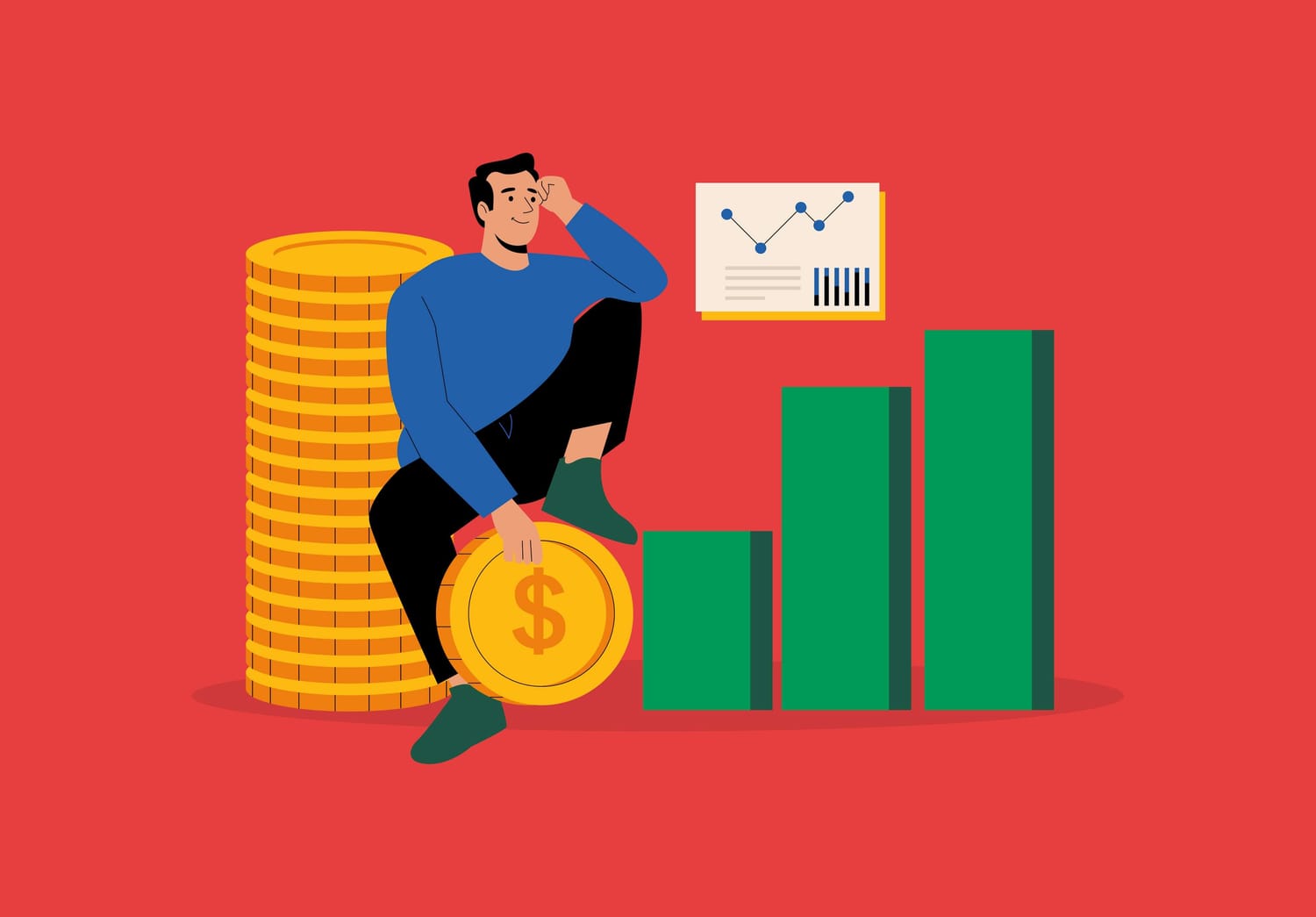
Picture this: your friend Zoro started investing $200/month at 25. You waited until 35, then invested the same amount. By 55, Zoro has roughly twice what you do even though he invested the same amount each month. And that’s simply because his money had 10 extra years to grow and compound.
Time in the market is what really builds wealth.
Now, on the other hand, your friend Sakura started investing at 22 but had no emergency fund. Her car broke down at 23, she had no cash, and she had to sell her investments at a loss to cover it. She paid taxes on gains, lost money on timing, and set herself back a year.
Both stories serve as cautionary tales. The goal isn't speed, it's smart timing.
The 3 Financial Stages You Need to Move Through First
Think of your financial life like building a house. You wouldn't put up walls before laying the foundation. Investing is the roof. It only makes sense after the structure underneath is solid.
Stage 1: Awareness - You know where your money goes. You track your spending, you understand your income, and have successfully limited those impulse purchases and subscriptions you forgot about.
Stage 2: Control - You've got a working budget. You're not just aware of your spending, you're actually directing it. You've cut unnecessary expenses, and you have a plan for each paycheck.
Stage 3: Stability - You’ve reached the green light. With an emergency fund in place and your most pressing debts under control, your finances are now predictable instead of chaotic.
You need to reach Stage 3 before investing becomes a priority. Not Stage 1. Not Stage 2. Stage 3.
Picture this: your friend Zoro started investing $200/month at 25. You waited until 35, then invested the same amount. By 55, Zoro has roughly twice what you do even though he invested the same amount each month. And that’s simply because his money had 10 extra years to grow and compound.
Time in the market is what really builds wealth.
Now, on the other hand, your friend Sakura started investing at 22 but had no emergency fund. Her car broke down at 23, she had no cash, and she had to sell her investments at a loss to cover it. She paid taxes on gains, lost money on timing, and set herself back a year.
Both stories serve as cautionary tales. The goal isn't speed, it's smart timing.
The 3 Financial Stages You Need to Move Through First
Think of your financial life like building a house. You wouldn't put up walls before laying the foundation. Investing is the roof. It only makes sense after the structure underneath is solid.
Stage 1: Awareness - You know where your money goes. You track your spending, you understand your income, and have successfully limited those impulse purchases and subscriptions you forgot about.
Stage 2: Control - You've got a working budget. You're not just aware of your spending, you're actually directing it. You've cut unnecessary expenses, and you have a plan for each paycheck.
Stage 3: Stability - You’ve reached the green light. With an emergency fund in place and your most pressing debts under control, your finances are now predictable instead of chaotic.
You need to reach Stage 3 before investing becomes a priority. Not Stage 1. Not Stage 2. Stage 3.
5 Clear Signs You're Ready to Start Investing

Stop guessing. Here's exactly what to look for.
1. You Have an Emergency Fund
This is the single most important prerequisite, non-negotiable. Aim for 3 to 6 months of living expenses sitting in a liquid savings account before you put a dollar into the market.
Why? Because markets fluctuate. If your car dies in January and your only cash is tied up in index funds that are down 15% that month, you have two terrible options: sell at a loss or get a loan and go into debt. Your emergency fund is what lets your investments breathe.
Related Blog Post: How to Build an Emergency Fund
2. Your High-Interest Debt Is Under Control
If you've got credit card debt at 20% interest, no investment strategy is going to beat that. Mathematically, paying off high-interest debt first is your best investment. Once that's gone (or at least seriously managed), you can start redirecting money toward growth.
Low-interest debt (like a reasonable mortgage or a car payment) is a different story. You can manage that strategically while also investing.
3. You Can Save Consistently
Can you set aside money every single month without breaking a sweat? Not occasionally. Not when you feel like it. Consistently.
If you're still struggling to save at all, investing will be a source of stress rather than growth. Investing is a habit, not a transaction. If the saving habit isn't there yet, build that first.
Related Blog Post: How to Save Money Without Sacrificing Your Lifestyle
4. You Understand the Basics
You don't need a finance degree. You don't need to understand options trading or cryptocurrency. But you should be able to answer: What's the difference between a stock and a bond? What's an index fund? What does "risk tolerance" mean for someone at my age?
This knowledge doesn't just protect you from bad decisions; it eliminates the fear that keeps so many people frozen on the sideline.
5. You're Genuinely Thinking Long-Term
If you're hoping to double your money in six months, investing will disappoint you fast. Wealth building through investments is a long-term journey, often taking 10, 20, or even 30 years. The real winners are those who remain consistent during market dips, ignore the sensational headlines, and stay calm when panic sets in around them.
Make sure to cultivate the right mindset before you get started.
How to Start Investing: A Simple Step-by-Step Plan

Once you're ready, keep it straightforward. The biggest mistake beginners make is overcomplicating it.
Step 1: Start Small You don't need $10,000 to start. Many platforms let you begin with $50 or $100. The point of starting small isn't the money; it's about building the habit of investing and becoming comfortable with watching your portfolio grow.
Step 2: Choose Simple Investments Index funds (like the S&P 500) are the reliable and effective choice for beginners looking to invest. They track a broad market index, have low fees, and historically outperform most actively managed funds over time. A simple three-fund portfolio (total US market, international, and bonds) is genuinely all most people need.
Step 3: Invest on a Schedule Choose a specific date each month to invest. Commit to putting in the same amount every time. Avoid the temptation to time the market in search of the “perfect” entry point; that strategy is rigged against you. Consistent investing over time beats waiting for the right moment almost every time.
Step 4: Automate It Set up automatic transfers so investing happens without you having to think about it. Treat it like a bill. Once it's automatic, your brain stops treating it as optional.
Step 5: Ignore Short-Term Noise The market will drop. Headlines will be scary. Someone will tell you a crash is coming. Historically, long-term investors who stick to their strategy often come out on top. Focus on your timeline, not today's news.
How Much Should You Actually Invest?
A reasonable starting target is 10 to 20% of your income, but that's just a guideline. If 5% is all you can manage right now, that's fine. Genuinely.
What matters more than the percentage is that you start and stay consistent. Someone who invests $100/month for 20 years will almost certainly outperform someone who invested $500/month for 3 years and then stopped.
The Compounding Effect: Why Starting Even One Year Earlier Matters
Here's a simple way to think about it:
You invest $200/month starting at age 30, with a 7% average annual return. By 65, you have roughly $362,000.
Start at 25 instead? Same amount, same return. By 65: roughly $528,000.
That five-year difference = $166,000 in additional wealth. From starting five years earlier with the exact same monthly contribution.
That's the compounding effect. It doesn't feel exciting in year one or two. But in year 15 or 20, you understand why it's called the eighth wonder of the world.
Once you're ready, keep it straightforward. The biggest mistake beginners make is overcomplicating it.
Step 1: Start Small You don't need $10,000 to start. Many platforms let you begin with $50 or $100. The point of starting small isn't the money; it's about building the habit of investing and becoming comfortable with watching your portfolio grow.
Step 2: Choose Simple Investments Index funds (like the S&P 500) are the reliable and effective choice for beginners looking to invest. They track a broad market index, have low fees, and historically outperform most actively managed funds over time. A simple three-fund portfolio (total US market, international, and bonds) is genuinely all most people need.
Step 3: Invest on a Schedule Choose a specific date each month to invest. Commit to putting in the same amount every time. Avoid the temptation to time the market in search of the “perfect” entry point; that strategy is rigged against you. Consistent investing over time beats waiting for the right moment almost every time.
Step 4: Automate It Set up automatic transfers so investing happens without you having to think about it. Treat it like a bill. Once it's automatic, your brain stops treating it as optional.
Step 5: Ignore Short-Term Noise The market will drop. Headlines will be scary. Someone will tell you a crash is coming. Historically, long-term investors who stick to their strategy often come out on top. Focus on your timeline, not today's news.
How Much Should You Actually Invest?
A reasonable starting target is 10 to 20% of your income, but that's just a guideline. If 5% is all you can manage right now, that's fine. Genuinely.
What matters more than the percentage is that you start and stay consistent. Someone who invests $100/month for 20 years will almost certainly outperform someone who invested $500/month for 3 years and then stopped.
The Compounding Effect: Why Starting Even One Year Earlier Matters
Here's a simple way to think about it:
You invest $200/month starting at age 30, with a 7% average annual return. By 65, you have roughly $362,000.
Start at 25 instead? Same amount, same return. By 65: roughly $528,000.
That five-year difference = $166,000 in additional wealth. From starting five years earlier with the exact same monthly contribution.
That's the compounding effect. It doesn't feel exciting in year one or two. But in year 15 or 20, you understand why it's called the eighth wonder of the world.
Saving vs. Investing: You Actually Need Both
A quick clarification, because people mix these up all the time.
Saving is safe, accessible, and low-growth. It's for your emergency fund, short-term goals, and money you might need within the next 1-3 years.
Investing is higher-growth, less accessible, and carries short-term risk. It's for long-term goals; retirement, financial independence, generational wealth.
You need both working simultaneously. Your savings act as a safeguard for your investments, preventing you from dipping into them when life throws unexpected challenges your way.
Your Investing Readiness Checklist
Before you open that brokerage account, run through this:
✔ I have 3-6 months of expenses in an emergency fund
✔ My high-interest debt is paid off or under control
✔ I'm saving consistently every month
✔ I understand index funds, risk tolerance, and long-term investing basics
✔ I'm thinking in years and decades, not weeks and months
If you can check all five? You're ready. Stop waiting.
Final Thoughts
The best time to start investing after fixing your finances isn't when the market looks good or when you feel 100% confident. It's when your financial foundation is stable, your habits are consistent, and you have a basic understanding of what you're doing.
That combination protects your investments from your own life emergencies. It keeps you from making fear-driven decisions. And it sets you up to actually benefit from the long-term power of compounding.
Build the foundation first. Then invest, and stay invested.
A quick clarification, because people mix these up all the time.
Saving is safe, accessible, and low-growth. It's for your emergency fund, short-term goals, and money you might need within the next 1-3 years.
Investing is higher-growth, less accessible, and carries short-term risk. It's for long-term goals; retirement, financial independence, generational wealth.
You need both working simultaneously. Your savings act as a safeguard for your investments, preventing you from dipping into them when life throws unexpected challenges your way.
Your Investing Readiness Checklist
Before you open that brokerage account, run through this:
✔ I have 3-6 months of expenses in an emergency fund
✔ My high-interest debt is paid off or under control
✔ I'm saving consistently every month
✔ I understand index funds, risk tolerance, and long-term investing basics
✔ I'm thinking in years and decades, not weeks and months
If you can check all five? You're ready. Stop waiting.
Final Thoughts
The best time to start investing after fixing your finances isn't when the market looks good or when you feel 100% confident. It's when your financial foundation is stable, your habits are consistent, and you have a basic understanding of what you're doing.
That combination protects your investments from your own life emergencies. It keeps you from making fear-driven decisions. And it sets you up to actually benefit from the long-term power of compounding.
Build the foundation first. Then invest, and stay invested.
Ready to take the next step? Read: How to Turn Financial Stability into Financial Freedom, because investing is just the beginning.




Trending
It's possible, even without an SSN.
Discover key qualities to consider when choosing right.
Learn what contributes to a successful business launch.

Deals & Promotions

You can also gain unlimited free access to Exclusive Content and Offers.

2026 © MitchelleO.D. All Rights Reserved.
Disclaimer: As an Amazon Associate, we earn from qualifying purchases. We may participate in additional affiliate networks or programs beyond Amazon.
Visit our Affiliate Disclosure Page to learn more.