


Traditional Banks vs Digital Banks: Which One Actually Works Better for Your Money?


Disclaimer
Some links may earn us a small commission at no extra cost to you.
Click here to read our full affiliate disclosure.
Disclaimer
We believe in complete transparency with our audience.
Some links may earn us a small commission at no extra cost to you.
Please know that we only recommend products/services we have personally used, thoroughly researched, and genuinely believe can benefit our audience.
We are immensely grateful for every click and purchase you make through these links. Thank you for being a part of our community and for your continued support!
Click here to read our full affiliate disclosure.
People don’t usually think about their bank until something unexpected happens. A surprise fee hits. The app crashes. You can't deposit a check at 10 PM because the branch is closed. Suddenly, the question of which bank you're with feels very, very important.
The traditional banks vs digital banks debate isn't just a tech conversation; it's a personal finance one. Your bank serves as the foundation of your entire financial system. Get it wrong, and you might end up paying unnecessary fees, missing tools that could save you hours, and generally making money management harder than it has to be.
What's the Difference Between Traditional and Digital Banks?

Before comparing them, let's make sure we're on the same page.
Traditional banks are what your parents probably used: physical branches, tellers behind glass, paper statements. They've been around for decades (sometimes centuries), they hold loans and mortgages, and they give you that comforting assurance that your money is securely tucked away in a vault.
Digital banks (also called neobanks) live entirely on your phone/computer. No branches, no queues. Signing up takes just minutes, and you can manage everything conveniently through an app. Plus, many of these services have eliminated the middlemen that traditional banks typically charge you for.
Neither is objectively better. But one is almost certainly better for you, depending on how you actually live and spend.
Before comparing them, let's make sure we're on the same page.
Traditional banks are what your parents probably used: physical branches, tellers behind glass, paper statements. They've been around for decades (sometimes centuries), they hold loans and mortgages, and they give you that comforting assurance that your money is securely tucked away in a vault.
Digital banks (also called neobanks) live entirely on your phone/computer. No branches, no queues. Signing up takes just minutes, and you can manage everything conveniently through an app. Plus, many of these services have eliminated the middlemen that traditional banks typically charge you for.
Neither is objectively better. But one is almost certainly better for you, depending on how you actually live and spend.
Traditional Banks vs Digital Banks: The Honest Breakdown

1. Fees
Here's a situation that many individuals have experienced: you check your account and notice a $12 monthly maintenance fee you forgot about. Multiply that by 12. That's $144 a year for... holding your own money.
Traditional banks tend to charge more because they have more overhead; staff, buildings, ATM networks. Common fees include monthly maintenance charges, minimum balance penalties, overdraft fees, and out-of-network ATM costs.
Digital banks typically charge far less. Many have zero monthly fees, free ATM withdrawals through partner networks, and no minimum balance requirements. Their whole pitch is "we cut costs by going online, and we pass the savings to you".
Bottom line: If you're not actively using the services that justify those fees, a digital bank will likely save you real money every month.
2. Convenience
Think about the last time you needed to do something with your bank. Did you have to:
Drive somewhere?
Wait until they opened?
Stand in line?
With traditional banks, certain services still require a physical visit. Opening accounts, resolving disputes, or obtaining notarized documents often requires taking time off work. With fixed hours, it’s no surprise that "banking hours" has become a well-known phrase.
Digital banks are available 24/7. Open an account at midnight. Transfer money on a Sunday. Freeze your card while sitting on your couch because you think you left it at a restaurant. Everything happens in real time, from your phone.
When it comes to everyday banking tasks, digital banks truly excel in convenience, and the difference is remarkable.
3. User Experience
Log into most traditional bank apps, and you'll feel like you've been transported back to 2009. Slow loading, confusing menus, and features buried three levels deep. Many of them built their digital tools reluctantly, layering new tech onto old infrastructure.
Digital banks were built for mobile first. That changes everything. The interfaces are clean, fast, and intuitive. You get:
Real-time transaction notifications (so you always know what's been spent)
Instant balance updates without refreshing
Smart categorisation of your spending
In-app support without waiting on hold
There's a significant difference between a tool that feels like a burden and one that genuinely inspires you to engage with your finances.
4. Money Management Tools
Traditional banks provide the essentials: account balances, transaction histories, and perhaps a savings account. While some have attempted to integrate budgeting features, these often come across as clunky and disconnected.
Digital banks treat your account like a personal finance dashboard. Built-in features often include:
Automatic spending categorisation — your coffee, groceries, and subscriptions are sorted without you lifting a finger
Savings "vaults" or pots — separate mini-accounts for different goals (holiday fund, emergency fund, new laptop)
Spending insights — weekly or monthly breakdowns showing exactly where your money went
Round-up savings — every purchase gets rounded up to the nearest dollar, and the difference goes into savings
Bill prediction — some apps flag when a recurring payment is higher than usual
If you've ever tried to budget and failed because it felt like too much work, a digital bank quietly handles a lot of that tracking for you. The data is already there; you just have to look at it.
5. Customer Support
Let's be honest: when something goes wrong with money, you want to talk to a human being. Not a chatbot. Not a help article. A person.
Traditional banks have this covered. You can walk in, explain your problem, and work through it face-to-face. For complex issues (a disputed transaction, a fraud case, or applying for a loan), human contact matters.
Digital banks are improving here, but many still rely heavily on in-app chat or email. Response times vary. For straightforward issues, it's fine. For stressful, urgent problems, it can feel inadequate.
If having reliable human support is non-negotiable for you, traditional banks still have the edge.
6. Cash
1. Fees
Here's a situation that many individuals have experienced: you check your account and notice a $12 monthly maintenance fee you forgot about. Multiply that by 12. That's $144 a year for... holding your own money.
Traditional banks tend to charge more because they have more overhead; staff, buildings, ATM networks. Common fees include monthly maintenance charges, minimum balance penalties, overdraft fees, and out-of-network ATM costs.
Digital banks typically charge far less. Many have zero monthly fees, free ATM withdrawals through partner networks, and no minimum balance requirements. Their whole pitch is "we cut costs by going online, and we pass the savings to you".
Bottom line: If you're not actively using the services that justify those fees, a digital bank will likely save you real money every month.
2. Convenience
Think about the last time you needed to do something with your bank. Did you have to:
Drive somewhere?
Wait until they opened?
Stand in line?
With traditional banks, certain services still require a physical visit. Opening accounts, resolving disputes, or obtaining notarized documents often requires taking time off work. With fixed hours, it’s no surprise that "banking hours" has become a well-known phrase.
Digital banks are available 24/7. Open an account at midnight. Transfer money on a Sunday. Freeze your card while sitting on your couch because you think you left it at a restaurant. Everything happens in real time, from your phone.
When it comes to everyday banking tasks, digital banks truly excel in convenience, and the difference is remarkable.
3. User Experience
Log into most traditional bank apps, and you'll feel like you've been transported back to 2009. Slow loading, confusing menus, and features buried three levels deep. Many of them built their digital tools reluctantly, layering new tech onto old infrastructure.
Digital banks were built for mobile first. That changes everything. The interfaces are clean, fast, and intuitive. You get:
Real-time transaction notifications (so you always know what's been spent)
Instant balance updates without refreshing
Smart categorisation of your spending
In-app support without waiting on hold
There's a significant difference between a tool that feels like a burden and one that genuinely inspires you to engage with your finances.
4. Money Management Tools
Traditional banks provide the essentials: account balances, transaction histories, and perhaps a savings account. While some have attempted to integrate budgeting features, these often come across as clunky and disconnected.
Digital banks treat your account like a personal finance dashboard. Built-in features often include:
Automatic spending categorisation — your coffee, groceries, and subscriptions are sorted without you lifting a finger
Savings "vaults" or pots — separate mini-accounts for different goals (holiday fund, emergency fund, new laptop)
Spending insights — weekly or monthly breakdowns showing exactly where your money went
Round-up savings — every purchase gets rounded up to the nearest dollar, and the difference goes into savings
Bill prediction — some apps flag when a recurring payment is higher than usual
If you've ever tried to budget and failed because it felt like too much work, a digital bank quietly handles a lot of that tracking for you. The data is already there; you just have to look at it.
5. Customer Support
Let's be honest: when something goes wrong with money, you want to talk to a human being. Not a chatbot. Not a help article. A person.
Traditional banks have this covered. You can walk in, explain your problem, and work through it face-to-face. For complex issues (a disputed transaction, a fraud case, or applying for a loan), human contact matters.
Digital banks are improving here, but many still rely heavily on in-app chat or email. Response times vary. For straightforward issues, it's fine. For stressful, urgent problems, it can feel inadequate.
If having reliable human support is non-negotiable for you, traditional banks still have the edge.
6. Cash
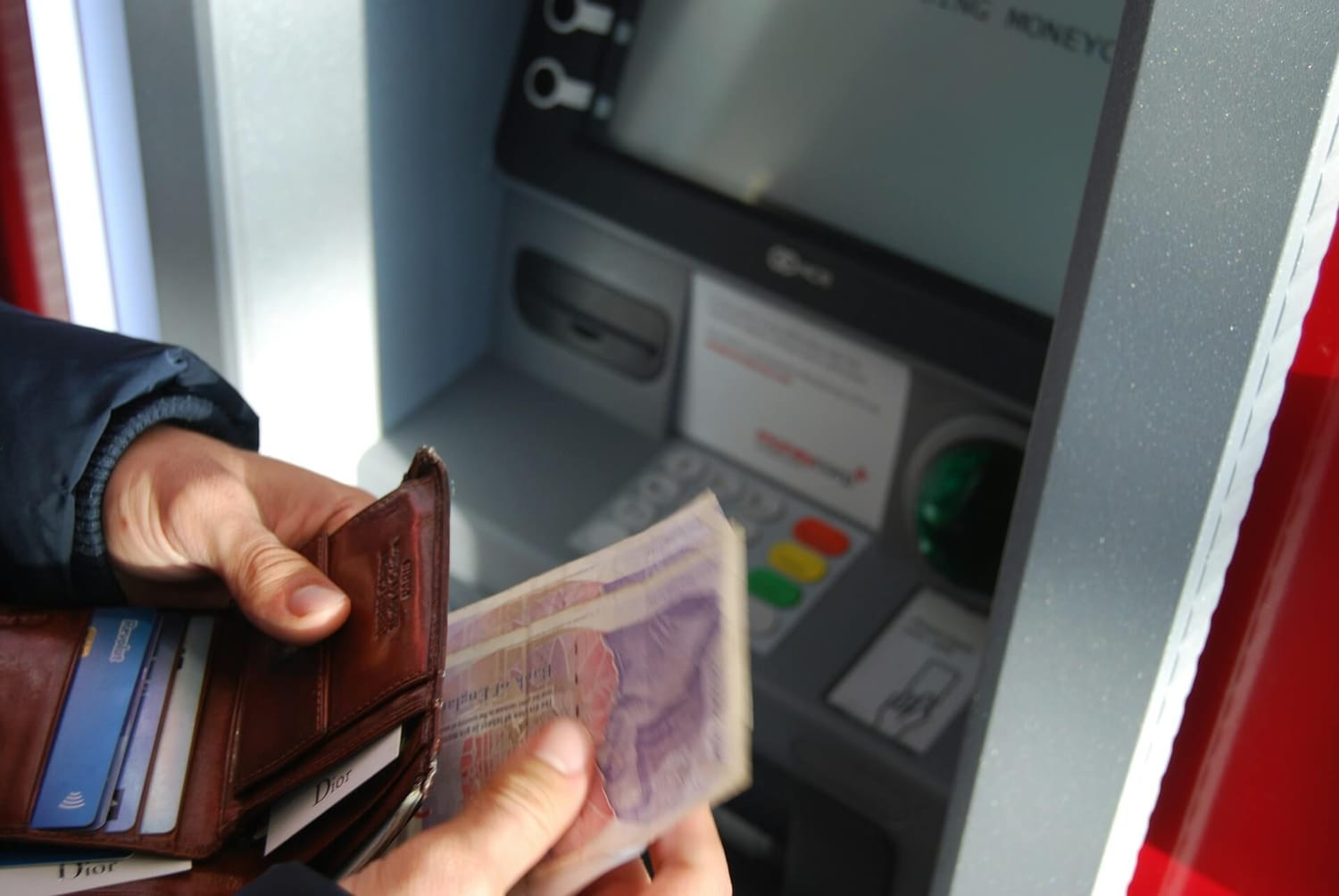
Got paid in cash? Need to deposit coins? Good luck doing that with most digital banks.
Traditional banks handle physical cash easily. Deposit it at a branch or ATM, and it's in your account. Simple.
Digital banks often have no real answer for this. Some partner with retail networks where you can deposit cash for a fee. Some don't offer cash deposits at all. If your income or lifestyle involves regular cash (market traders, freelancers paid in cash, anyone who gets birthday money in an envelope) this is a genuine limitation.
7. Loans, Mortgages, and Big Financial Moves
If you're thinking about buying a house or taking out a significant loan, traditional banks remain the stronger option for now.
They have the infrastructure, the mortgage advisors, and the in-person relationship building that complex lending often requires. Digital banks are starting to offer personal loans and credit products, but the full suite of financial services traditional banks carry (mortgages, business banking, investment accounts) isn't quite there yet for most neobanks.
Who Should Choose a Traditional Bank?
A traditional bank is probably the better fit if:
You deal with cash regularly — depositing and withdrawing is a daily or weekly need
You're planning a major financial move — mortgage, business account, large loan
You want face-to-face support — especially if you're older or less comfortable with apps
You value long-established reputation — some people sleep better knowing their bank has been around for 100 years
Who Should Choose a Digital Bank?
A digital bank is probably right for you if:
You do most things on your phone anyway — you'll barely notice the transition
You want to actually understand your spending — the built-in tools make this automatic
You're tired of paying unnecessary fees — digital banks often eliminate the charges traditional banks rely on
You travel or move frequently — many digital banks have excellent currency conversion rates and zero foreign transaction fees
You want to build better saving habits — automated savings features make this much easier
The Smartest Move
Many financially savvy individuals follow this approach, and the results are impressively effective.
Use a traditional bank as your "base": salary comes in here, mortgage or rent goes out here, and you have a place to handle cash.
Use a digital bank for day-to-day spending and saving: your weekly budget lives here, you track your habits here, and you take advantage of the smart tools.
A practical example: your paycheck lands in your traditional bank. You automatically transfer your weekly spending budget to your digital bank. From there, you use the digital bank's categorisation and spending alerts to stay on track.
Your traditional bank takes care of the "serious" financial matters, while your digital bank manages all your everyday transactions and visible needs.
This setup gives you the stability of an established institution and the tools that actually help you manage money in real life.
Got paid in cash? Need to deposit coins? Good luck doing that with most digital banks.
Traditional banks handle physical cash easily. Deposit it at a branch or ATM, and it's in your account. Simple.
Digital banks often have no real answer for this. Some partner with retail networks where you can deposit cash for a fee. Some don't offer cash deposits at all.
If your income or lifestyle involves regular cash (market traders, freelancers paid in cash, anyone who gets birthday money in an envelope) this is a genuine limitation.
7. Loans, Mortgages, and Big Financial Moves
If you're thinking about buying a house or taking out a significant loan, traditional banks remain the stronger option for now.
They have the infrastructure, the mortgage advisors, and the in-person relationship building that complex lending often requires.
Digital banks are starting to offer personal loans and credit products, but the full suite of financial services traditional banks carry (mortgages, business banking, investment accounts) isn't quite there yet for most neobanks.
Who Should Choose a Traditional Bank?
A traditional bank is probably the better fit if:
You deal with cash regularly — depositing and withdrawing is a daily or weekly need
You're planning a major financial move — mortgage, business account, large loan
You want face-to-face support — especially if you're older or less comfortable with apps
You value long-established reputation — some people sleep better knowing their bank has been around for 100 years
Who Should Choose a Digital Bank?
A digital bank is probably right for you if:
You do most things on your phone anyway — you'll barely notice the transition
You want to actually understand your spending — the built-in tools make this automatic
You're tired of paying unnecessary fees — digital banks often eliminate the charges traditional banks rely on
You travel or move frequently — many digital banks have excellent currency conversion rates and zero foreign transaction fees
You want to build better saving habits — automated savings features make this much easier
The Smartest Move
Many financially savvy individuals follow this approach, and the results are impressively effective.
Use a traditional bank as your "base": salary comes in here, mortgage or rent goes out here, and you have a place to handle cash.
Use a digital bank for day-to-day spending and saving: your weekly budget lives here, you track your habits here, and you take advantage of the smart tools.
A practical example: your paycheck lands in your traditional bank. You automatically transfer your weekly spending budget to your digital bank. From there, you use the digital bank's categorisation and spending alerts to stay on track.
Your traditional bank takes care of the "serious" financial matters, while your digital bank manages all your everyday transactions and visible needs.
This setup gives you the stability of an established institution and the tools that actually help you manage money in real life.
Common Mistakes People Make When Choosing a Bank

Sticking with the same bank out of habit. The bank you've had since you were 16 might not be the best fit for who you are at 30. It's worth reviewing.
Ignoring fees until they hurt. Run the numbers on what you're actually paying annually. You might be surprised.
Assuming "newer" means "riskier." Legitimate digital banks are regulated and insured the same way traditional banks are. Check for proper licensing and deposit insurance in your country, but don't dismiss a neobank just because it's newer.
Not using the tools your bank already has. Whether traditional or digital, most banks have features that go unused. Spend 20 minutes exploring your current app. You might find something genuinely useful already sitting there.
The Future Is Probably Both
Traditional banks aren't going anywhere. They're too embedded in lending, mortgages, and complex financial services to disappear. But they're rapidly borrowing features from digital banks: better apps, real-time notifications, smarter tools.
Digital banks, meanwhile, are starting to expand into loans, investments, and even physical cards. The lines are blurring.
The traditional banks vs digital banks question may eventually become moot as both converge toward the same thing: a seamless, smart, low-fee banking experience that works on your phone and has your back when things get complicated.
For now, the best approach is to understand what each does well and build your setup around that.
Final Thoughts
Your bank isn't just a place to store money. It's a tool. And like any tool, the right one depends on what you're trying to build.
If you want to reduce fees, track spending automatically, and actually understand where your money goes each month, a digital bank gives you that foundation out of the box.
If you need in-person support, handle cash regularly, or are managing complex financial products like mortgages, a traditional bank is still the more complete solution.
And if you want the best of both worlds? Use them together.
Your next step: Take 10 minutes today to compare your current bank's fees with one or two digital bank alternatives. Just knowing the difference might be enough to make a change that saves you money every single month.
Sticking with the same bank out of habit. The bank you've had since you were 16 might not be the best fit for who you are at 30. It's worth reviewing.
Ignoring fees until they hurt. Run the numbers on what you're actually paying annually. You might be surprised.
Assuming "newer" means "riskier." Legitimate digital banks are regulated and insured the same way traditional banks are. Check for proper licensing and deposit insurance in your country, but don't dismiss a neobank just because it's newer.
Not using the tools your bank already has. Whether traditional or digital, most banks have features that go unused. Spend 20 minutes exploring your current app. You might find something genuinely useful already sitting there.
The Future Is Probably Both
Traditional banks aren't going anywhere. They're too embedded in lending, mortgages, and complex financial services to disappear. But they're rapidly borrowing features from digital banks: better apps, real-time notifications, smarter tools.
Digital banks, meanwhile, are starting to expand into loans, investments, and even physical cards. The lines are blurring.
The traditional banks vs digital banks question may eventually become moot as both converge toward the same thing: a seamless, smart, low-fee banking experience that works on your phone and has your back when things get complicated.
For now, the best approach is to understand what each does well and build your setup around that.
Final Thoughts
Your bank isn't just a place to store money. It's a tool. And like any tool, the right one depends on what you're trying to build.
If you want to reduce fees, track spending automatically, and actually understand where your money goes each month, a digital bank gives you that foundation out of the box.
If you need in-person support, handle cash regularly, or are managing complex financial products like mortgages, a traditional bank is still the more complete solution.
And if you want the best of both worlds? Use them together.
Your next step: Take 10 minutes today to compare your current bank's fees with one or two digital bank alternatives. Just knowing the difference might be enough to make a change that saves you money every single month.
Ready to go deeper?
Check out our guides on The Best Personal Finance Tools for beginners and How to Create a Simple Budget.





Trending
It's possible, even without an SSN.
Discover key qualities to consider when choosing right.
Learn what contributes to a successful business launch.

Deals & Promotions

You can also gain unlimited free access to Exclusive Content and Offers.

2026 © MitchelleO.D. All Rights Reserved.
Disclaimer: As an Amazon Associate, we earn from qualifying purchases. We may participate in additional affiliate networks or programs beyond Amazon.
Visit our Affiliate Disclosure Page to learn more.