


Master These 10 Risk Management Rules to Survive Trading Long-Term


Disclaimer
Some links may earn us a small commission at no extra cost to you.
Click here to read our full affiliate disclosure.
Disclaimer
We believe in complete transparency with our audience.
Some links may earn us a small commission at no extra cost to you.
Please know that we only recommend products/services we have personally used, thoroughly researched, and genuinely believe can benefit our audience.
We are immensely grateful for every click and purchase you make through these links. Thank you for being a part of our community and for your continued support!
Click here to read our full affiliate disclosure.
Here's something nobody tells you when you start trading: your strategy matters way less than you think.
I know, I know. You probably spent weeks finding the "perfect" setup, studying charts, watching YouTube gurus promise 90% win rates.
But the truth is, most traders fail not because they can't read charts. They fail because they never learned to protect their money.
Risk management is what separates traders who blow their accounts in 6 months from those still in the game 5 years later.
This guide outlines the essential risk management rules that differentiate professionals from gamblers, while highlighting information necessary for survival in the markets.
Let's get into it.
Why Risk Management Beats Strategy Every Single Time
Here's an uncomfortable fact that took me way too long to accept:
A mediocre strategy paired with strong risk management will always outperform a brilliant strategy that lacks proper risk controls. Every. Single. Time.
Why? Because trading isn't about being right once or twice. It's a probability game played across hundreds of trades. And if you lose too much on your bad trades, the game ends before your edge even has time to play out.
Think of it this way: You could correctly predict market direction 60% of the time and still go broke if you're risking $500 to make $100. The math just doesn't work.
Risk management doesn’t focus on increasing your wins. Its focus is on minimising damage when the market does what markets do: surprise you, humiliate you, and prove you wrong.
And trust me, the market will prove you wrong. A lot.
The 10 Risk Management Rules You Should Master
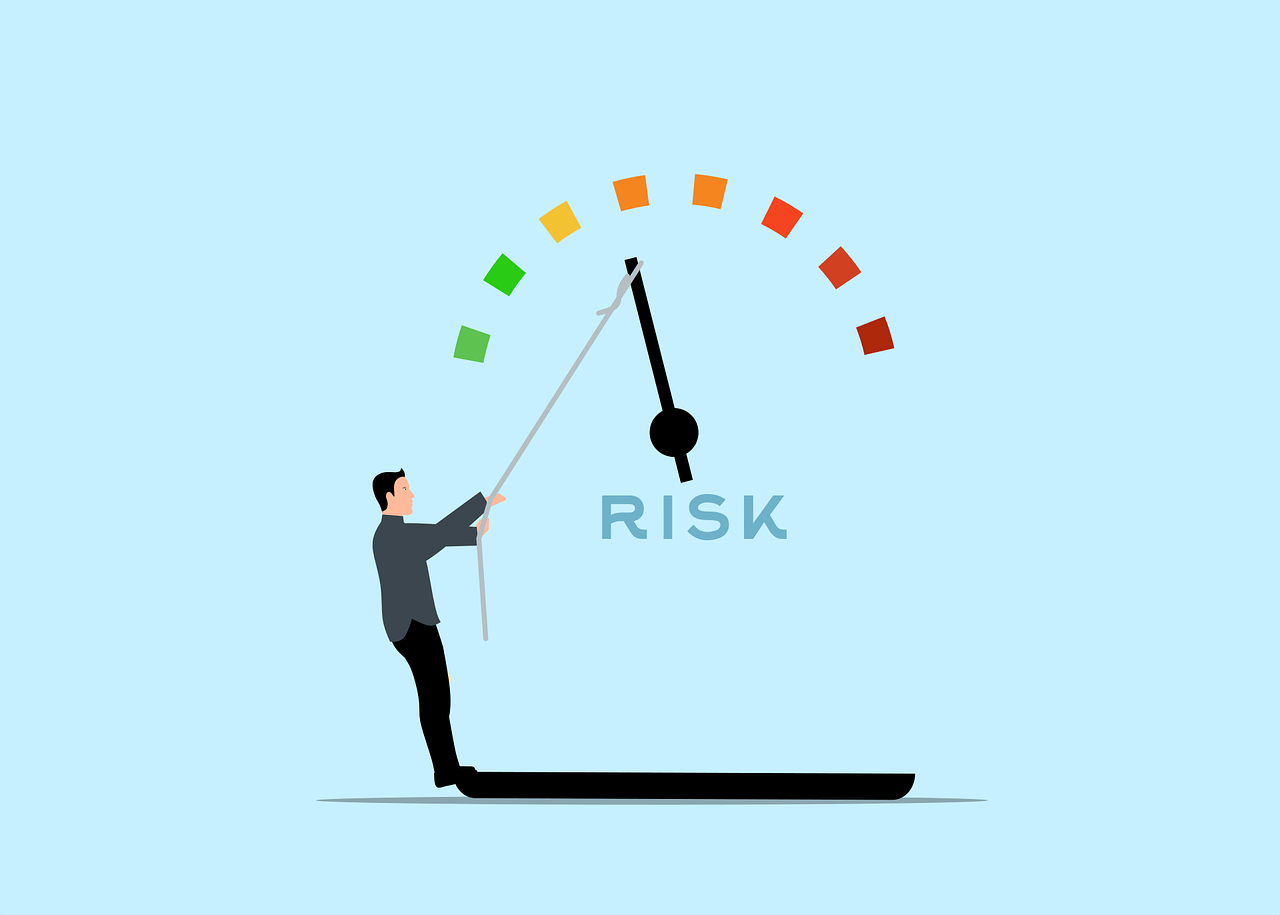
Rule #1: Never Risk More Than 1-2% Per Trade (Seriously, Never)
This is the golden rule of trading. It's also the most ignored rule by beginners.
Let me spell it out clearly:
$1,000 account → risk $10-$20 per trade
$5,000 account → risk $50-$100 per trade
$10,000 account → risk $100-$200 per trade
That's it. No exceptions for "really good setups”. No breaking the rule to "recover losses faster”.
Why This Rule Exists
Markets are unpredictable. Period. Even the best trading systems experience losing streaks, and professional traders with decades of experience get humbled regularly.
Risking 1-2% ensures three critical things:
No single trade can destroy your account
You can survive 10, 20, even 30 losses in a row (it happens)
Your emotions stay stable (you're not sweating with every tick)
I've watched traders risk 5-10% per trade. Sure, some manage to grow their accounts fast. For about three weeks. Then they hit an inevitable losing streak and completely blow their account.
The 1-2% rule feels painfully slow at first. But it's the only way to guarantee you'll still be trading next year.
Rule #2: Always Use a Stop-Loss (No Exceptions, Ever)

Trading without a stop-loss isn't confidence. It's denial disguised as bravery.
A stop-loss is a predefined exit point that automatically closes your trade at a specific loss level. It exists to protect you from two things: yourself and the market.
Why Traders Skip Stop-Losses (And Why It's a Disaster)
Beginners avoid stop-losses with thoughts like:
"The price might come back in my favour"
"I don't want to lock in the loss"
"I'll close it manually if it gets bad"
Adopting this mindset can turn minor, manageable losses of $50 into $500 disasters that destroy your account.
Professional traders accept losses quickly and move on. Amateurs hope and pray the market reverses.
Hope is not a risk management strategy.
Stop-Losses Don't Mean You're Wrong
Placing a stop-loss doesn't mean you failed. It means you're acknowledging that uncertainty exists and you're mature enough to define your risk before entering a trade.
Every professional trader plans their exit before hitting the buy button. If you're not doing this, you're gambling, not trading.
Rule #3: Calculate Your Position Size (Never Guess)

One of the biggest beginner mistakes is choosing lot sizes randomly.
Sound familiar?
"I always trade 0.1 lots"
"I go bigger when I'm feeling confident"
"I trade smaller after I lose"
This approach guarantees inconsistent results and emotional chaos.
Proper Position Sizing Depends On Three Things
Your total account size
Your risk percentage (remember, 1-2%)
Your stop-loss distance in pips
Here's how it works: if your stop-loss is located 50 pips away, you will require a smaller position size compared to when it is 20 pips away. This method ensures that your dollar risk remains the same no matter where you've placed your stop.
Example: You have a $5,000 account and risk 1% ($50) per trade.
Trade A: 50-pip stop = 0.1 lot size
Trade B: 25-pip stop = 0.2 lot size
Both trades risk exactly $50
This consistency is what allows professional traders to measure their strategy's effectiveness and survive those inevitable losing streaks.
Rule #4: Your Risk-to-Reward Ratio Must Make Mathematical Sense

Risk management does not only involve protecting against losses. It also requires ensuring that your wins are substantial enough to cover the losses you may incur.
This is your risk-to-reward ratio, arguably the most misunderstood concept in trading.
Breaking Down Risk-to-Reward
If you risk $100 to potentially make:
$100 → that's 1:1
$200 → that's 1:2
$300 → that's 1:3
Here's the beautiful part: with a 1:2 risk-to-reward ratio, you only need to win 40% of your trades to break even. Win 50% and you're profitable.
The Mistake Beginners Make
Most new traders do this backwards. They:
Take profits at the first sign of green
Let losses run, hoping for a reversal
End up with a 3:1 risk-to-reward (risk $300 to make $100)
Professional traders flip this completely. They cut losses fast and give winners room to develop. Over hundreds of trades, this imbalance creates consistent profitability even with mediocre win rates.
Aim for at least 1:2 on every trade.
Rule #5: Set Maximum Daily and Weekly Loss Limits
Even disciplined traders have terrible days. And bad weeks happen to everyone.
That's why professionals set loss limits not just per trade, but per day and per week.
Example Loss Limits
Stop trading for the day after losing 2-3%
Stop trading for the week after losing 5-6%
Why does this matter? Because losses mess with your head.
After three losses in a row, you're not the same trader anymore. Your judgment gets cloudy. You start revenge trading, chasing losses, breaking your rules.
Stepping away isn't giving up. It's professional risk management. It's recognising that your most valuable trading asset isn't money but a clear, disciplined mind.
Rule #6: Never Add to Losing Trades (Unless You Really Know What You're Doing)
This tendency traps so many beginners. It's called "averaging down": adding more positions to a losing trade to potentially break even or reclaim profitability when price reverses.
Sounds logical, right? But it's actually more likely to end up blowing your account.
Why Adding to Losers Is Dangerous
It increases your exposure when you're already wrong about market direction. It amplifies emotional pressure. And worst of all, it can turn a manageable $100 loss into a catastrophic $500+ disaster.
Some advanced traders use scaling techniques with strict rules and years of experience. But if you're reading this guide, that's not you yet.
Simple rule: If a trade is going against you, don't make it bigger. Accept the loss and move on.
Rule #7: Only Trade Money You Can Afford to Lose
This rule has nothing to do with technical analysis. It's pure psychology.
You should only fund your trading account with money that, if completely lost, wouldn't affect your life.
Never Trade With
Rent or mortgage money
Your emergency fund
Student loans or borrowed money
Credit cards (absolutely not)
Money reserved for bills
Trading with "scared money" destroys your decision-making. You hesitate over good setups. You exit winners too early. You panic during normal drawdowns.
Professional traders sleep well at night because their trading capital is truly risk capital. If you're checking your account at 3 AM with your heart racing, your position size is too big, or you're trading with money you can't afford to lose.
Rule #8: Expect Losing Streaks and Plan for Them

Here's something they don't show in those Instagram trading screenshots:
Even profitable traders experience 5-10 losses in a row. Extended drawdowns are normal. Periods where nothing works happen to everyone.
This is statistical variance, not personal failure.
Risk management exists specifically to ensure that losing streaks don't end your trading career. Your system needs to survive 10 consecutive losses without blowing your account.
Do the math right now: If you risk 2% per trade, ten losses in a row only cost you about 20% of your account. Painful, but survivable.
If you risk 10% per trade? Ten losses and you've blown your account. You're done.
Rule #9: Define Your Risk Before You Enter Every Trade
Professional traders know these four things before clicking buy or sell:
Entry price
Stop-loss level
Position size
Maximum dollar loss
If you can't answer "How much can I lose on this trade?" you shouldn't be in that trade.
This seems obvious, but I guarantee most beginners enter trades thinking about profit targets while having zero clue what their actual risk is.
Define risk first. Profit second. Always.
Rule #10: Keep Your Rules Simple and Non-Negotiable

The best risk management rules are brutally simple and followed without exception.
Complex rules create problems:
You hesitate when opportunities appear
You find "exceptions" during emotional moments
They break down completely under stress
Your risk rules should be so simple that even after three losing trades, you can still follow them perfectly.
Write them down. Print them out. Tape them to your monitor. Make them non-negotiable laws in your trading universe.
Why Most Traders Ignore Risk Management (And Pay the Price)
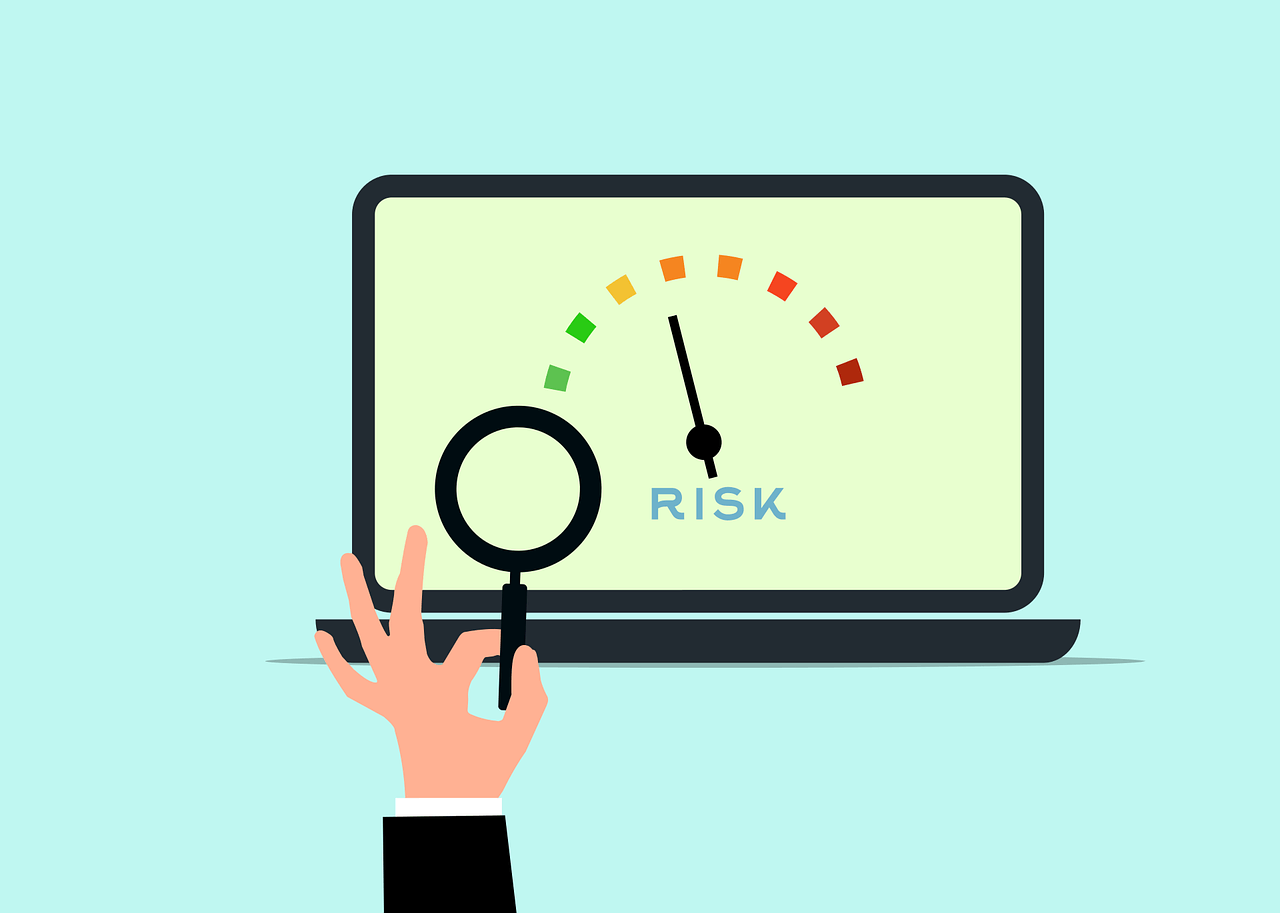
So, why do traders skip risk management?
It's boring. It limits excitement. It slows down account growth. It feels restrictive when you "know" a trade will work.
But here's the thing: trading isn't entertainment. The market doesn't reward excitement or confidence. It rewards survivability and consistency.
Every blown account has the same story: great analysis, terrible risk management.
Risk Management Is Your Real Competitive Edge
Most beginners see risk management as defensive, conservative, profit-limiting.
The truth? It's the exact opposite.
Proper risk management:
Preserves your capital through inevitable drawdowns
Stabilises your emotions so you can think clearly
Enhances your performance by removing fear
Risk management gives you the freedom to trade calmly, stick to your system during losing streaks, and improve systematically over time.
It's not a cage. It's a safety net that lets you take calculated risks without fear.
The Bottom Line: Protect Capital First, Everything Else Second
Every trader wants the secret strategy, the perfect indicator, the holy grail setup.
Very few are willing to control losses, accept drawdowns, and respect uncertainty.
That's why 90% of trading accounts fail within the first year.
If you take nothing else from this guide, burn this into your brain: You cannot trade without capital. You cannot learn without surviving.
The traders who make it long-term aren't the smartest or the boldest. They're the ones who master risk management first and let everything else follow.
Start treating risk management as your foundation, not an afterthought. Your account will still be here next year, and the year after that.
And in trading, longevity is the ultimate edge.
Ready to level up your trading? Start by calculating your proper position size for your next trade using the 1-2% rule. Write down your risk before you enter. Do it for every single trade for the next month and watch how your results transform.





Trending
It's possible, even without an SSN.
Discover key qualities to consider when choosing right.
Learn what contributes to a successful business launch.

Deals & Promotions

You can also gain unlimited free access to Exclusive Content and Offers.

2026 © MitchelleO.D. All Rights Reserved.
Disclaimer: As an Amazon Associate, we earn from qualifying purchases. We may participate in additional affiliate networks or programs beyond Amazon.
Visit our Affiliate Disclosure Page to learn more.