

The Best CRM for Service-Based Businesses (Freelancers, Consultants, Agencies, B2Bs, Etc)


Disclaimer
Some links may earn us a small commission at no extra cost to you.
Click here to read our full affiliate disclosure.
Disclaimer
We believe in complete transparency with our audience.
Some links may earn us a small commission at no extra cost to you.
Please know that we only recommend products/services we have personally used, thoroughly researched, and genuinely believe can benefit our audience.
We are immensely grateful for every click and purchase you make through these links. Thank you for being a part of our community and for your continued support!
Click here to read our full affiliate disclosure.
Let me guess. Right now, your "customer relationship management system" is a mess of:
Google Sheets that don’t make any sense three weeks after they were created
An overflowing email inbox that you promise yourself you’ll organise the next day
Random sticky notes on your desk (or worse, your phone's notes app)
Your brain, which is way too full and definitely forgetting someone important
Sound familiar?
Here's the thing. If you operate a service business, such as freelancing, consulting, coaching, or agency work, you are involved in the people business. Your level of success is directly related to relationships, not products that are placed on a shelf.
And managing people? That's complex.
You've got leads to nurture. Proposals that require follow-up. Projects need to be delivered. Invoices need to be sent. And in the midst of all this, you are expected to remember everything while also doing the work itself.
Spoiler alert: You can't. Not long-term, anyway.
That's where a real CRM comes into play. Not the complicated systems that large enterprises use. Not the platforms that focus heavily on marketing. A proper CRM for service-based businesses that understands what you actually do all day.
What Makes ClearCRM Different
Image Source: ClearCRM
ClearCRM isn't trying to be everything to everyone. It's laser-focused on one thing: helping service providers manage clients without losing their minds.
Think of it as the brain your business desperately needs.
Here's what it does:
It captures every lead that comes your way. It tracks your sales pipeline, so you know exactly where money's coming from. It manages both your clients AND your projects (because winning the deal is just part of what needs to be done).
ClearCRM also automates the tedious stuff you don't like doing. And it keeps all your communication organised in one location rather than being spread out over many different applications.
Most importantly? It's designed for individuals who sell their time and expertise.
Who Actually Needs It?
ClearCRM is perfect if you're a:
Freelancer tired of manually tracking every client interaction
Consultant managing complex, long-term relationships
Coach nurturing leads through months-long decision processes
Agency owner coordinating teams, clients, and projects simultaneously
Service entrepreneur who needs structure but not corporate bloat
If you sell services instead of products, this is your tool.
Why Service Businesses Need CRMs More Than Anyone Else

Product companies have it easy (relatively speaking).
They automate checkout. Deliver products. Done.
Service businesses? We write custom proposals for clients. Set up discovery calls to understand needs. We manage ongoing client relationships while meeting project milestones and pursuing timely payments. We follow up relentlessly to ensure satisfaction and success.
Without a proper CRM, you're flying blind. You forget to follow up on that important lead. You lose track of where deals stand. Your client experience becomes inconsistent. Projects slip through cracks. Admin work eats your entire Friday.
I've seen talented freelancers lose $20K deals because they forgot to follow up after sending a proposal. Not because they're bad at what they do, but because they're drowning in a chaotic operational environment.
A client management CRM like ClearCRM fixes that, giving you three essentials: structure, visibility, and automation.
Structure helps prevent leads from vanishing into thin air and taking revenue opportunities with them. Visibility allows you to understand what's actually happening in your business. Automation enables systems that handle the tedious tasks while you focus on the work that matters.
Breaking Down ClearCRM's Features
Let's talk about what ClearCRM does in practical terms.
1. Lead & Contact Management That Makes Sense
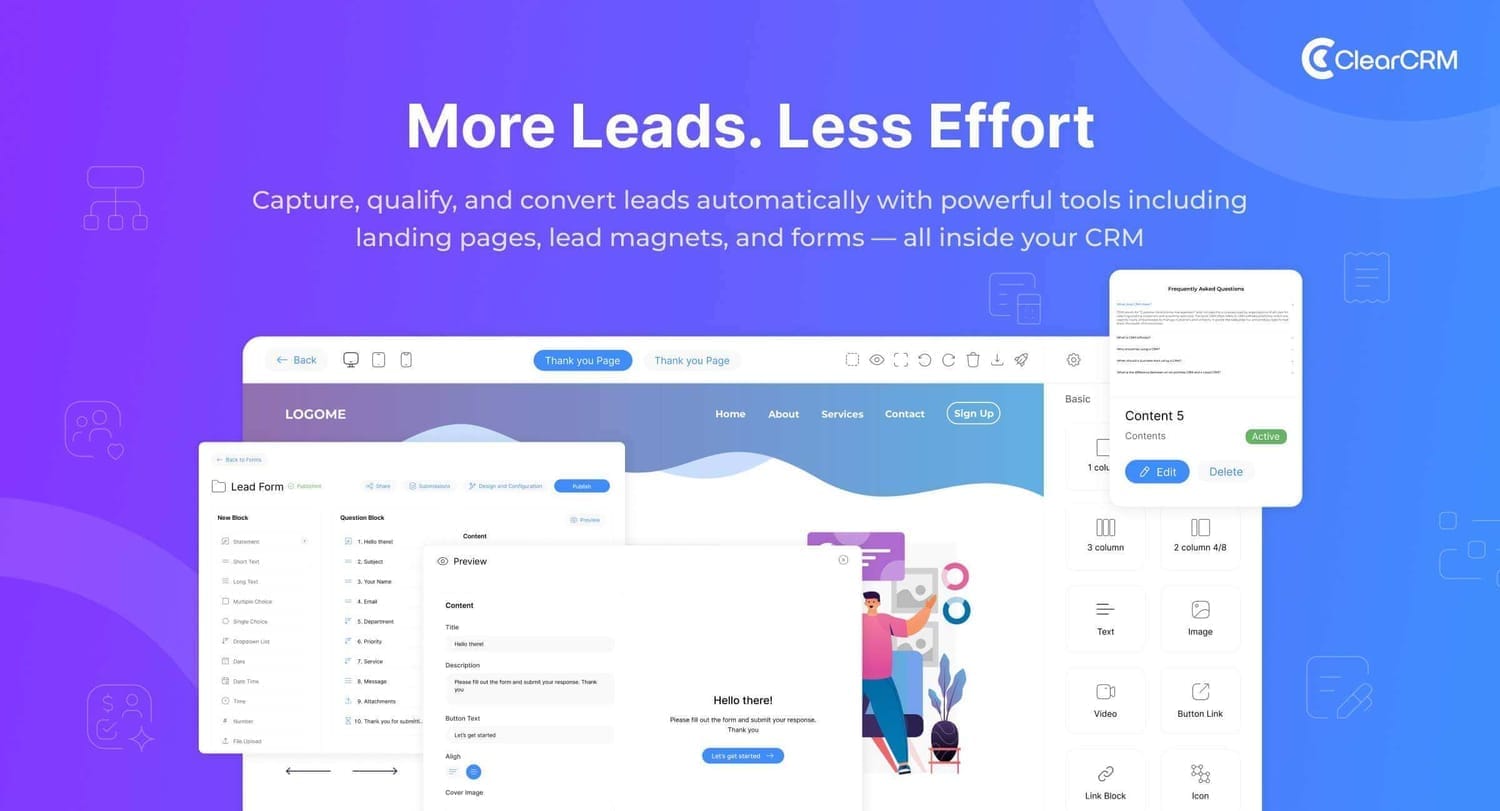
Image Source: ClearCRM
Every lead gets a profile. Every client has a history.
You can add custom fields for whatever matters to your business. This can include budget range, service type, industry, referral source, and other relevant details.
All emails, calls, and meetings are logged in one location.
No more digging through email threads from three months ago trying to remember what someone said.
For example, you meet someone at a conference. You add them to ClearCRM with a note: "Met at Web Summit, interested in Q2, prefers Zoom calls." Three months later, when they're ready, you have context. You look prepared. You win the deal.
That's not magic. That's just effective systems.
2. Custom Sales Pipelines (See Your Money Before It Arrives)
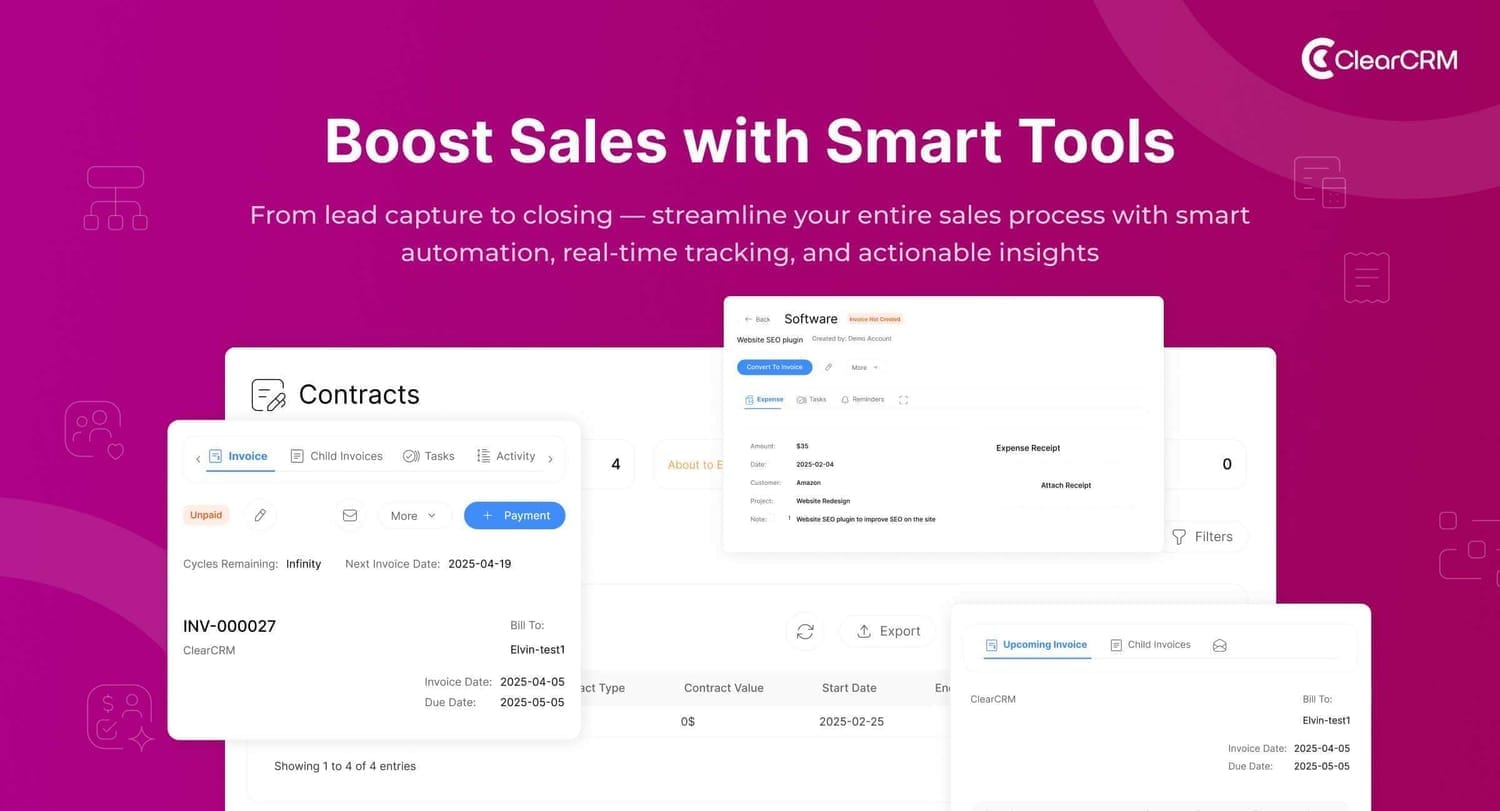
Image Source: ClearCRM
Here's where ClearCRM gets powerful.
You build pipelines that match how you actually sell. Maybe yours looks like:
New Lead
Discovery Call Booked
Proposal Sent
Negotiating
Won
Lost
Drag deals between stages. See exactly what's worth $5K, $20K, $100K at each stage. Spot bottlenecks instantly (why are 12 deals stuck at 'Proposal Sent'?).
This visibility changes everything.
Suddenly, you're not guessing about next month's revenue. You're forecasting based on actual pipeline data. You know which deals need attention. You can prioritise the right conversations.
It's like switching from a paper map to GPS. You always know exactly where you are.
3. Task Management (Avoid Disorganisation)
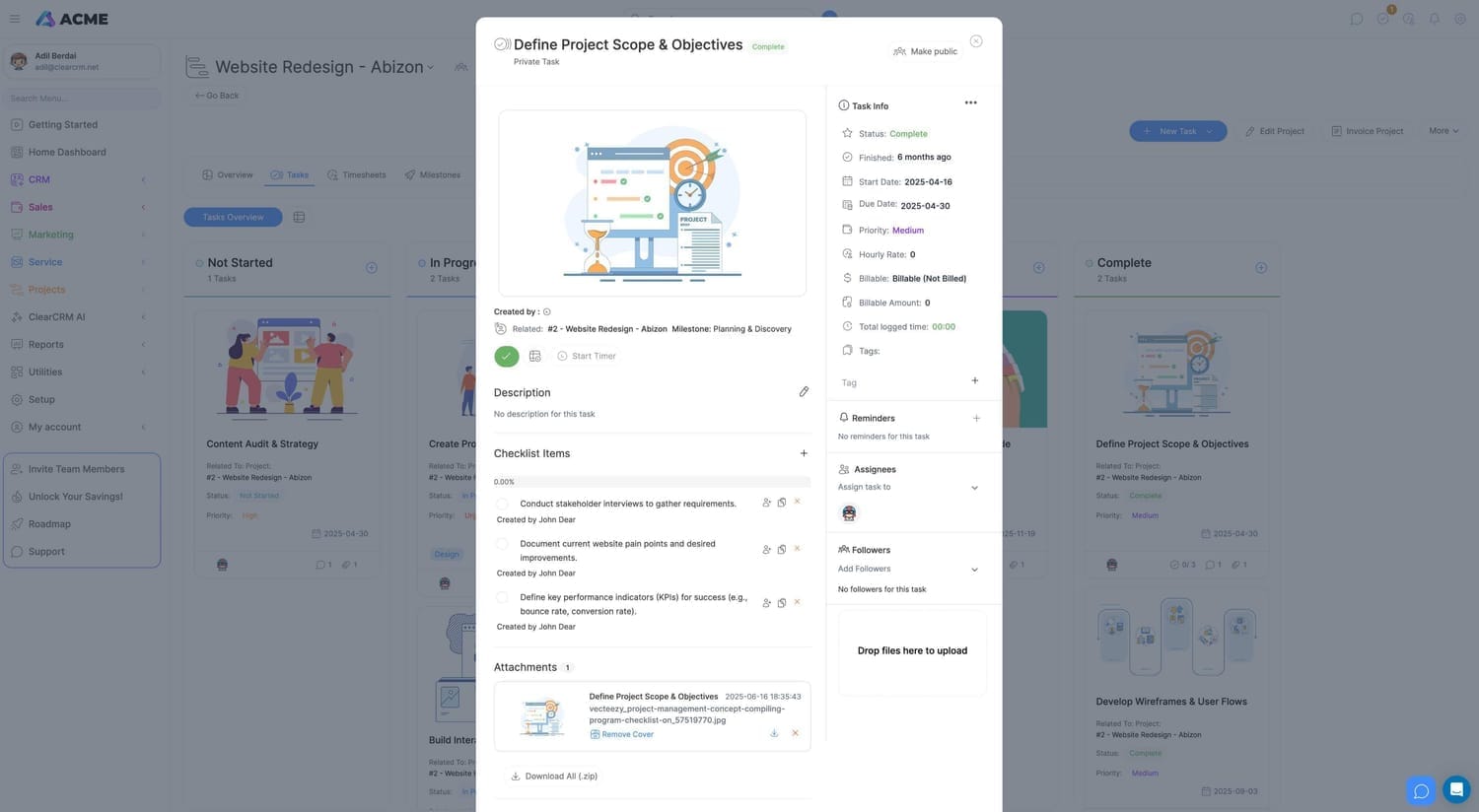
Image Source: ClearCRM
Want to know the #1 reason deals die?
Lack of follow-up.
Someone shows interest. You get busy. Days pass. They go with someone else who actually stayed in touch.
ClearCRM solves this with tasks that stick to contacts and deals: set reminders, automate follow-ups, and assign them to team members.
Example workflow: Deal moves to "Proposal Sent." ClearCRM automatically creates a task: "Follow up on proposal in 3 days." You get reminded. You follow up. Your close rate jumps 30%.
This stuff compounds fast.
4. Client Project Management
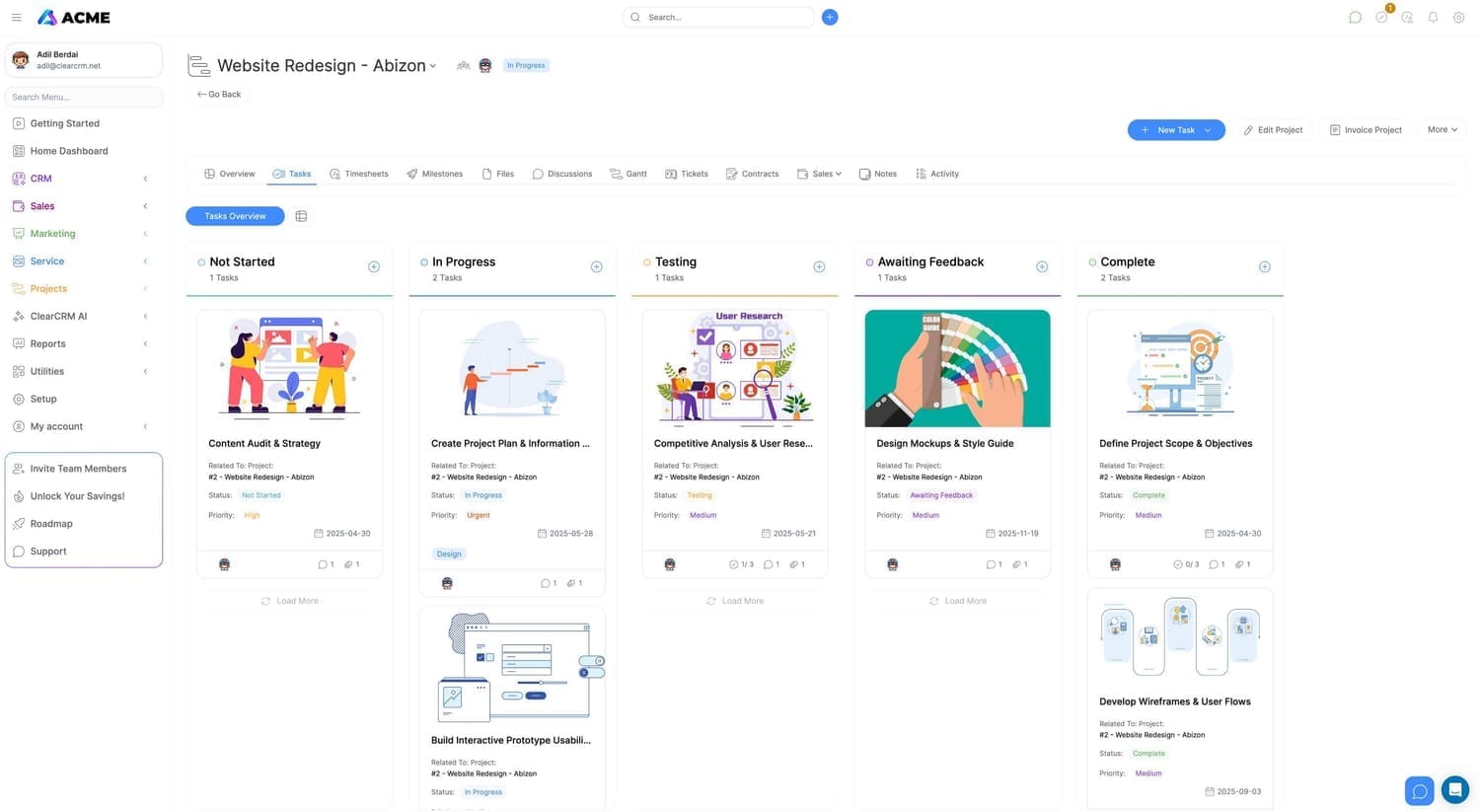
Image Source: ClearCRM
Most CRMs view "deal won" as the endpoint.
ClearCRM knows better. Winning the deal is just the beginning.
Once someone says yes, convert that deal into a project. Assign tasks. Track deadlines. Monitor progress. Keep everyone aligned.
For agencies, especially, this is huge. You're not jumping between a CRM for sales and Trello for project management. It's all one system. Your sales team sees the delivery status. Your delivery team sees deal history.
No silos. No confusion. Just smooth handoffs.
5. Quotes, Invoices, and Actually Getting Paid
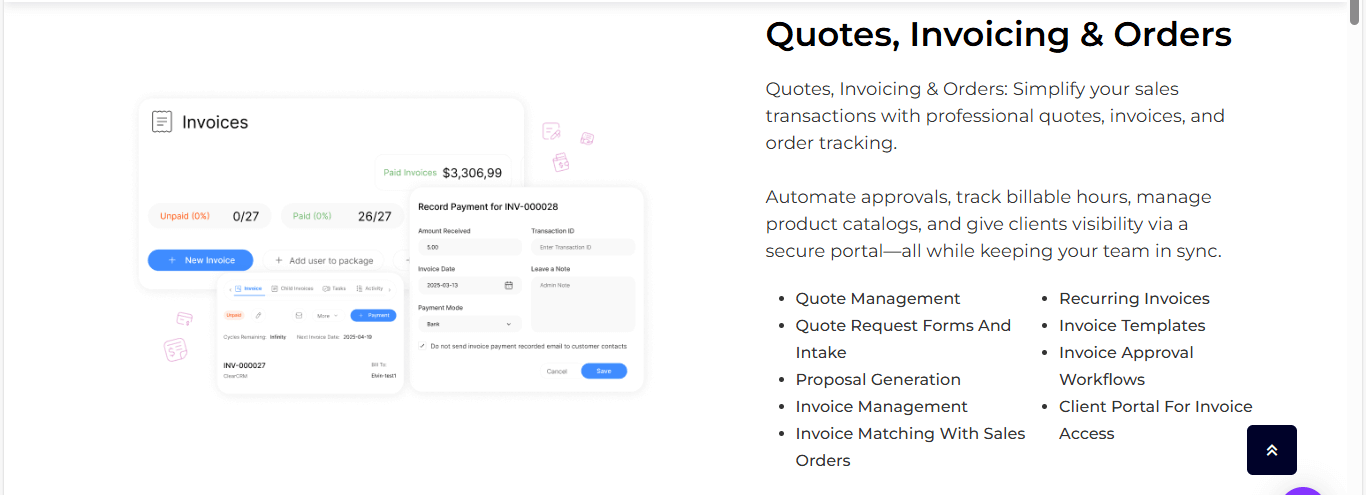
Image Source: ClearCRM
Do you know how painful invoicing usually is?
You close a deal. Then you have to open your separate invoicing tool, recreate all the details, send it, track payment status manually, and pray they pay on time.
ClearCRM handles this in-app. Generate professional quotes. Convert them to invoices with one click. Track what's paid, what's outstanding, and who's late.
Translation: You get paid faster with less effort.
For freelancers and consultants, having your sales pipeline CRM and billing in one place saves hours every month.
6. Automation That Actually Saves Time
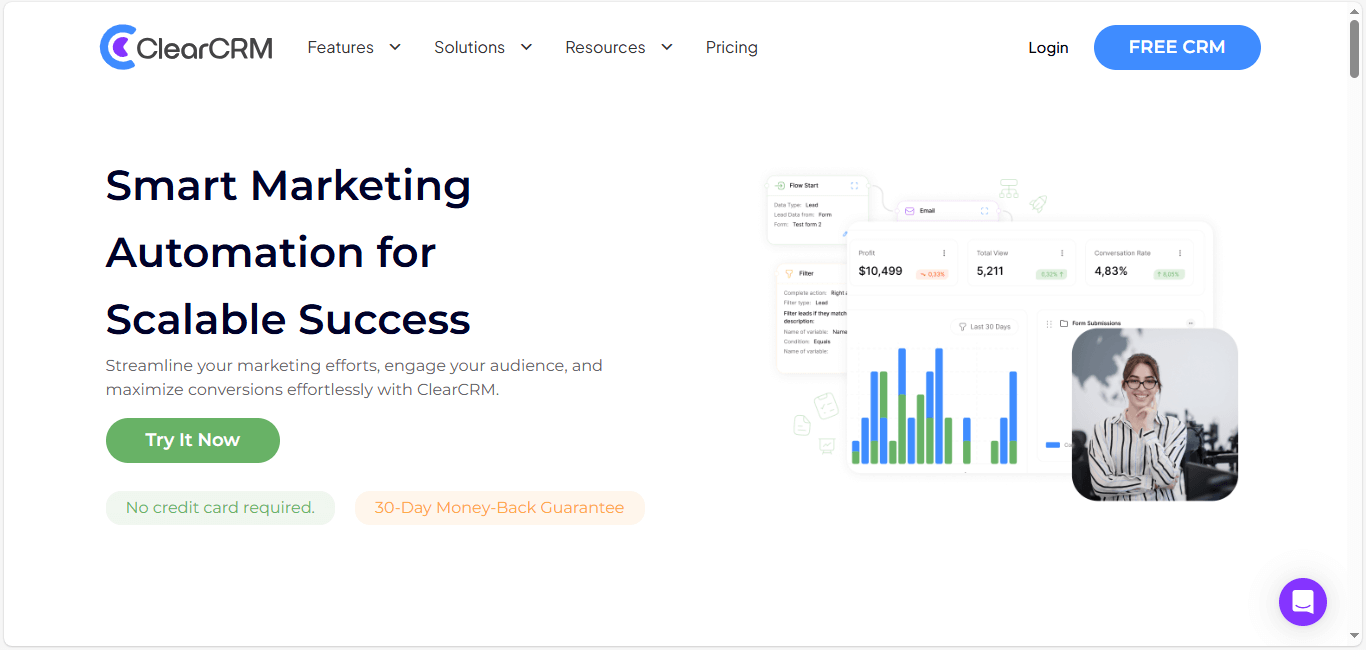
Image Source: ClearCRM
Look, automation sounds appealing until you need a computer science degree to set it up.
ClearCRM keeps it simple. You can automate things like:
Sending follow-up emails when deals hit certain stages
Creating onboarding tasks when someone becomes a client
Assigning deals to team members based on criteria
Updating statuses automatically
Sending payment reminders
The goal isn't to automate everything. It's to automate the repetitive admin work that keeps you from doing actual, valuable stuff.
Set it once. Benefit forever.
How ClearCRM Stacks Up Against Other Options

ClearCRM vs. HubSpot
HubSpot is powerful. Enterprise-grade. Feature-packed.
It's built for massive teams handling thousands of leads. Think contact scoring, advanced automation workflows, custom reporting dashboards, and integrations with 1,000+ apps.
But it's also expensive, complicated, and overkill for most service businesses.
Pricing: Starts at $50/month for basic CRM (free tier is limited), jumps to $800+/month for Professional, and $3,600+/month for Enterprise. Add-ons like Marketing Hub can double that.
For a 3-person consulting firm, you're paying for features like sales forecasting and A/B testing you'll never use, plus a steep learning curve (expect 20+ hours to set up properly).
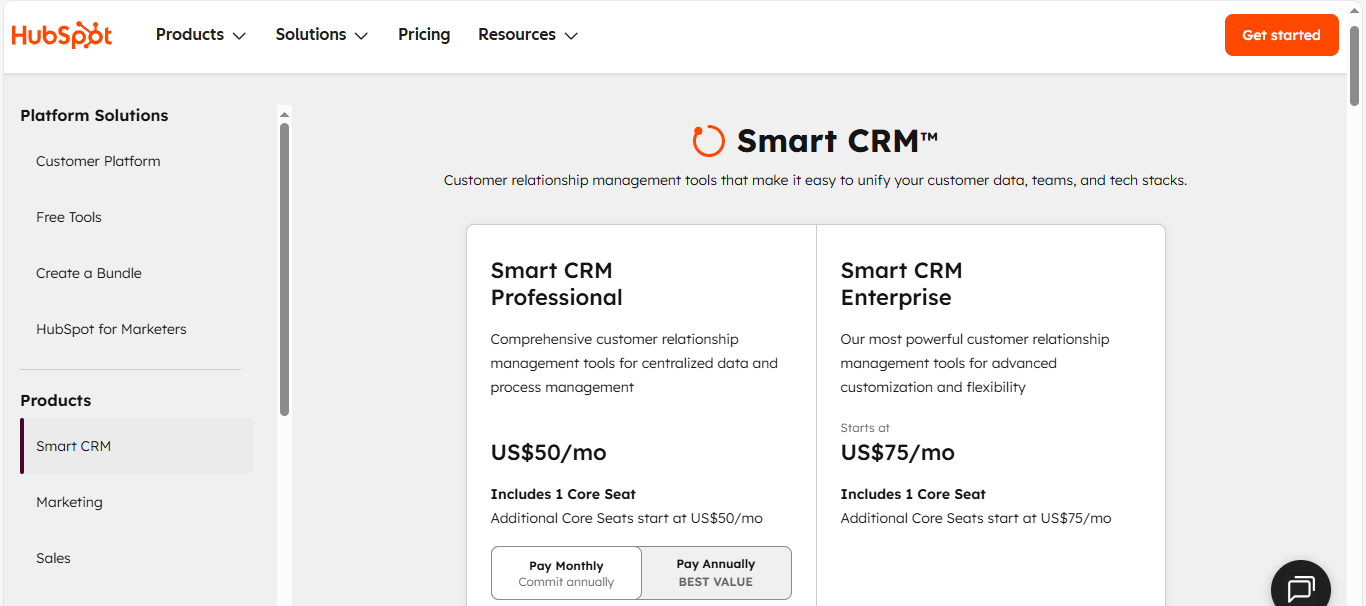
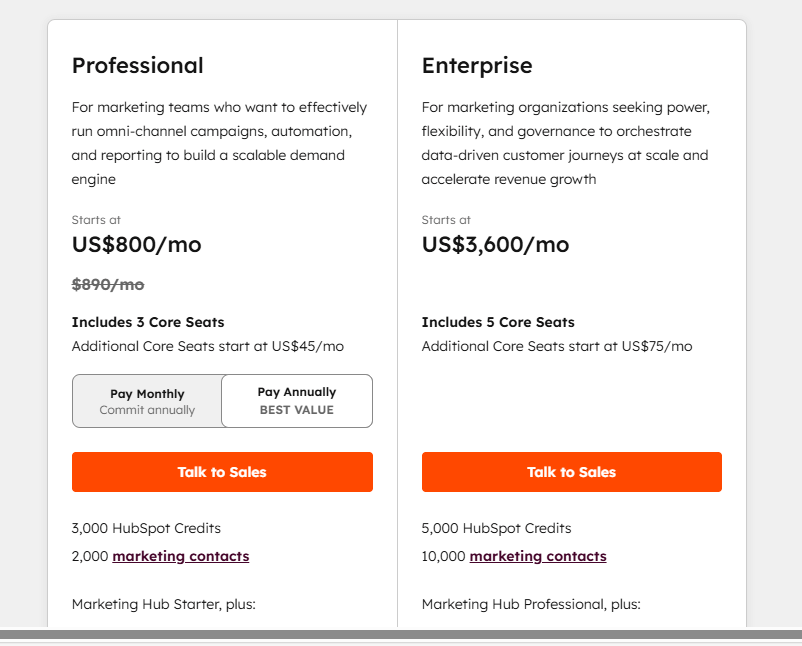
Image Source: hubspot.com
ClearCRM wins on: Simplicity, price, and being built specifically for service providers.
Pricing: Just $40/month for unlimited projects, contacts, and core features. That's 20x cheaper than HubSpot Professional.
Simplicity: Drag-and-drop pipelines tailored for services (e.g., client onboarding, invoicing, project tracking). Set up in under 10 minutes, no IT team needed.
Service-focused: Pre-built templates for consulting, agencies, and freelancers. Tracks proposals, time billing, and retainers out of the box, unlike HubSpot's generic setup.
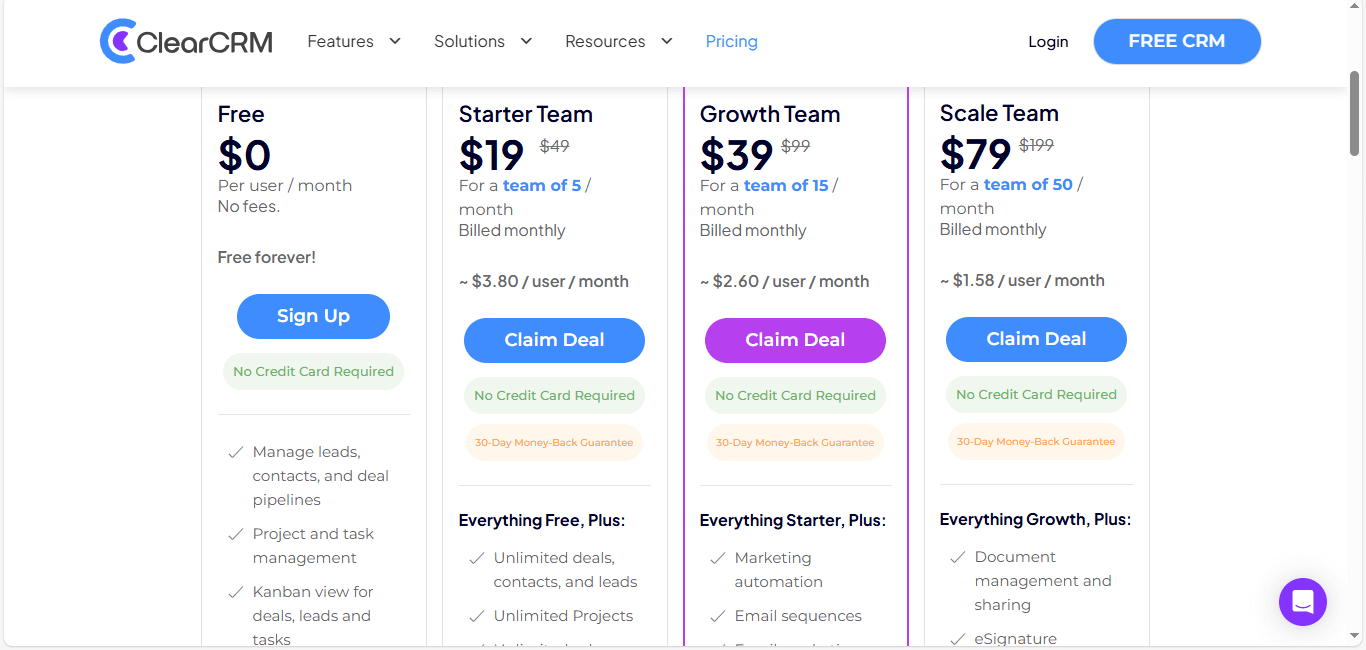
Image Source: ClearCRM
Switch to ClearCRM and save time, money, and headaches. It’s suitable for growing your firm without adding unnecessary complications.
ClearCRM vs. Zoho CRM
Zoho CRM has tons of features. Maybe too many.
It offers multi-channel support, AI-powered predictions (Zia), advanced analytics, and workflow automation, plus 50+ modules for sales, marketing, inventory, books, and campaigns.
Ideal for enterprises managing multiple tasks and responsibilities simultaneously.
But the interface feels overwhelming, setup requires serious customisation, and there's a learning curve that can take weeks.
Pricing: Free for up to 3 users (very limited), $14/user/month for Standard, $24 for Professional, $35 for Enterprise, $45 for Ultimate. A 5-user team? That's $70–$225/month, plus extra costs for add-ons like Campaigns ($4/user).
Can be complicated: Dashboard with numerous tabs, nested menus, and customizable fields that demand configuration. Setup wizards help, but tweaking workflows or reports often needs Zoho's developer tools or consultants (expect 20–40 hours for basics).
For a small consulting firm, it's like having a kitchen full of gadgets you'll never use when all you really need is a good pan and a sharp knife.
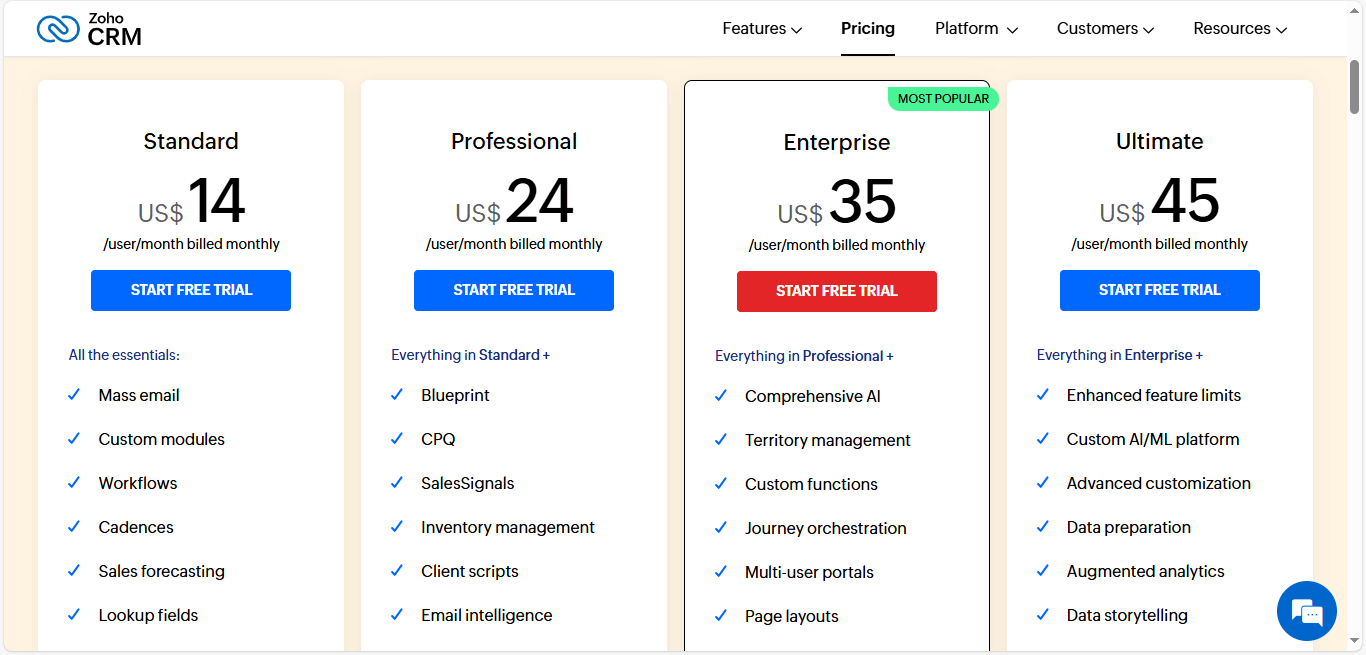
Image Source: zoho.com
ClearCRM wins on: Clean interface, price, faster onboarding, and not needing to be a tech wizard to use it effectively.
Pricing: Just $40/month for unlimited projects, contacts, and core features (for a team of 15 users). 80% cheaper than Zoho Professional for a small team of 5.
Clean interface: Intuitive, mobile-first design with one-click pipelines, visual kanban boards, and minimal clutter. All elements are where they should be. No need to hunt through sub-menus.
Faster onboarding: Live setup in 10 minutes via guided tours and pre-built service templates (e.g., client projects, invoicing). No coding or custom fields needed to get 80% value day one.
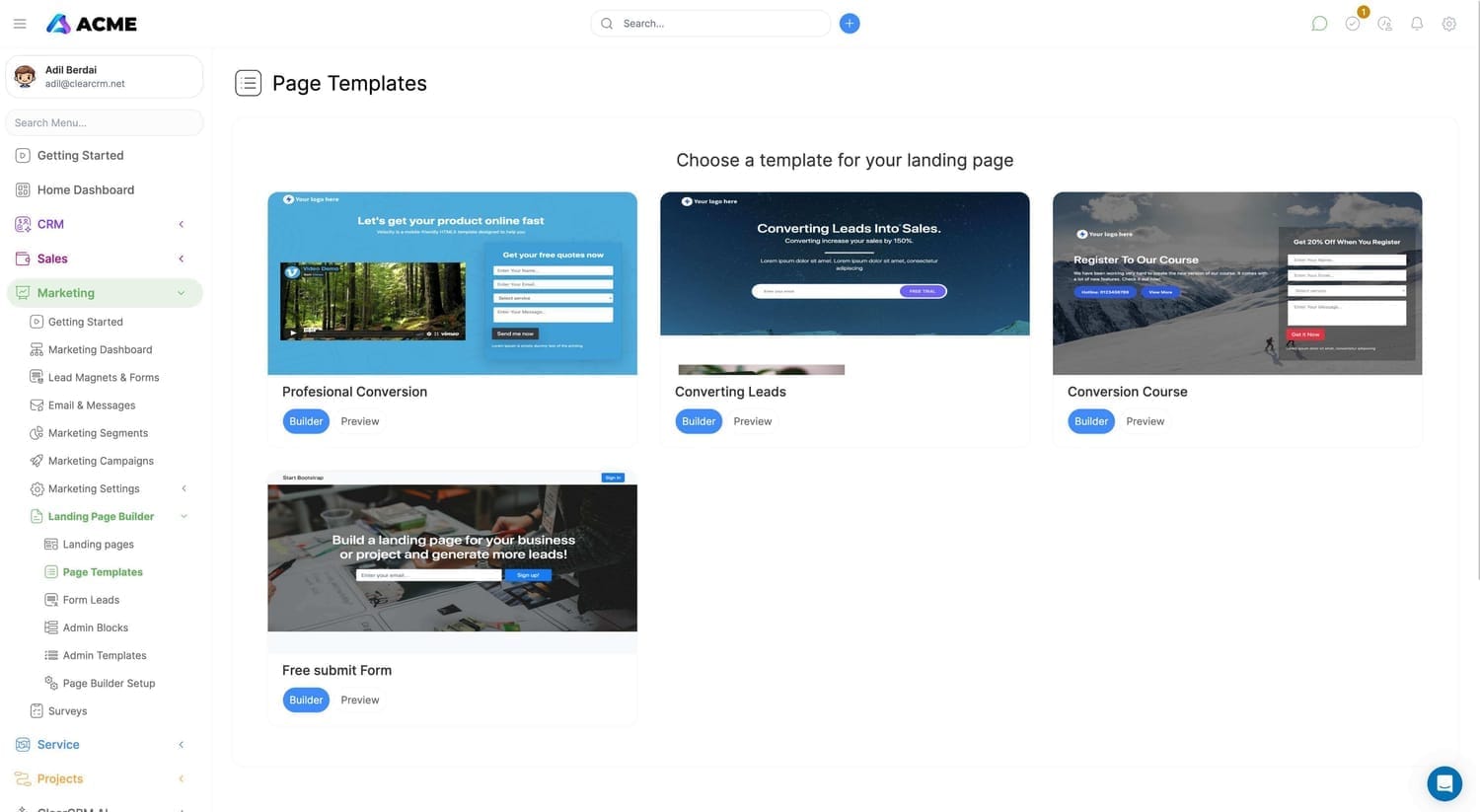
Image Source: ClearCRM
Switch to ClearCRM, so your team can focus on clients, not configuration.
ClearCRM vs. Your Current "System"
If you're using spreadsheets, email, and memory?
ClearCRM wins. Every single time. This isn't even a debate.
Real-World Use Cases (How People Actually Use This)

Freelancers: Scaling Without Burnout
Here's a typical freelancer journey with ClearCRM:
Someone fills out your contact form. They automatically enter ClearCRM. A task gets created to follow up within 24 hours. You reach out, qualify them, and move them through your pipeline.
You send a quote directly from ClearCRM. They accept. You convert it to a project with clear tasks and deadlines. You send the invoice. They pay. ClearCRM logs everything.
The result? You handle 3x more clients without working 3x harder. Because systems scale. Your brain doesn't.
Agencies: Coordinating Chaos
Agencies have multiple salespeople, multiple clients, and multiple projects happening simultaneously.
ClearCRM gives everyone the same view. Sales can see the project status. Project managers can see deal history. Leadership can see pipeline forecasts and team performance.
No more Slack messages asking "What's the status on the Smith account?" It's right there in the system.
Coaches & Consultants: Relationship-First Selling
Coaching and consulting sales cycles are long. Sometimes months. Relationships matter more than features and pricing.
ClearCRM helps you stay present throughout that journey. Track every conversation. Schedule thoughtful follow-ups. Automate onboarding for new clients. Maintain relationships with past clients who might refer or return.
It's a relationship-first CRM, which is exactly what consultants need.
The Pros and Cons

What ClearCRM Does Well
Built specifically for service businesses (not adapted from something else)
Powerful pipeline and deal tracking
Excellent follow-up and task management
Integrated billing saves tool switching
Handles both sales AND project delivery
Clean, intuitive interface
Scales as you grow
Where It Falls Short
Not designed for funnel-based digital product businesses
Probably overkill if you're a solo freelancer with 2 clients
Won't replace specialised tools for e-commerce or pure marketing automation
Bottom line: If you sell services and manage clients, this is your tool. If you sell online courses or run an e-commerce store, use a platform like Systeme.io instead. If you sell both services and digital products, you can use both platforms hand-in-hand.
So, Is ClearCRM Worth It?
If your business depends on client relationships, absolutely.
You get structure without complexity. Visibility without overwhelm. Automation without requiring technical skills. Professional operations without enterprise pricing.
Most importantly, you get peace of mind. Nothing falls through cracks. Leads don't get forgotten. Clients have great experiences. You look professional and organised because you actually are.
Think about it this way:
If you lose one $10K client because of poor follow-up, that's way more expensive than any CRM subscription. If you waste 5 hours per week on admin chaos, that's $500-$2,000 in lost revenue monthly (depending on your rate).
The best CRM for service-based businesses pays for itself by preventing losses and creating capacity.
ClearCRM isn't perfect for everyone. But if you're running a service business and you're tired of disorganisation stealing your time and costing you deals?
It might be exactly what you need.




Trending
It's possible, even without an SSN.
Discover key qualities to consider when choosing right.
Learn what contributes to a successful business launch.

Deals & Promotions
You can also gain unlimited free access to Exclusive Content and Offers.
2026 © MitchelleO.D. All Rights Reserved.
Disclaimer: As an Amazon Associate, we earn from qualifying purchases. We may participate in additional affiliate networks or programs beyond Amazon.
Visit our Affiliate Disclosure Page to learn more.