

The 5 Business Systems Every Solopreneur Must Have


Disclaimer
Some links may earn us a small commission at no extra cost to you.
Click here to read our full affiliate disclosure.
Disclaimer
We believe in complete transparency with our audience.
Some links may earn us a small commission at no extra cost to you.
Please know that we only recommend products/services we have personally used, thoroughly researched, and genuinely believe can benefit our audience.
We are immensely grateful for every click and purchase you make through these links. Thank you for being a part of our community and for your continued support!
Click here to read our full affiliate disclosure.
Here's what nobody tells you about running an online business:
At some point, working harder stops working.
You're posting content every day and replying to direct messages late at night. Delivering client work on weekends. You're doing everything.
But your income remains unpredictable.
One month you may earn $5000. The next month, you might only make $1000. Growth feels unstable, similar to balancing on a tightrope. And somehow, working for yourself is more stressful than your old corporate job.
Does this sound familiar to you?
Here's the truth: Your major issue is a lack of effective structure.
The good news? You don't need enterprise software, a virtual assistant, or a business degree to fix this. You need a handful of simple business systems that actually support you, rather than draining you.
This guide covers exactly what those systems are, why you need them earlier than you think, and how to set them up without becoming overwhelmed.
If you want a consistent online income (not random successful months), you should keep reading.
What Are Business Systems?
Let's clear something up right now.
When many individuals hear the term “business systems”, they often envision intricate flowcharts, costly automation tools, and corporate jargon that causes them to lose focus.
That’s not the subject of our discussion.
A business system is just a repeatable way of doing something without relying on your brain to remember it.
That's it. Nothing fancy.
Think about it this way: Right now, when someone asks about your pricing, what happens? Do you have a clear process, or do you wing it each time?
When a potential client says “I'm interested”, where does that information go? Your inbox? Does it get put into a random note on your phone or just remain in your memory?
If the answer lives in your head, your business is one distraction away from making a mistake.
Systems exist to answer these critical questions:
What happens when someone shows interest?
How do I follow up without feeling pushy?
Where are all my leads right now?
What needs my attention today?
When you have the answers to these questions written down and not just existing in your mind, you have a system.
Why You Need Business Systems Earlier Than You Think

Most solopreneurs tell themselves, "I'll get organised once I'm making more money."
Big mistake.
Growth without systems doesn't create freedom. It creates chaos that suffocates you.
Here's what actually happens when you grow without systems:
You get more leads, but you forget to follow up with a significant portion of those leads. You acquire more clients, but are always in a state of trying to recall deadlines. You generate more revenue, but you end up working 60 hours a week and feeling burned out.
The early stage of your business is when systems matter most because:
You're handling everything solo
Your time and energy are already maxed out
Every dropped lead directly impacts your income
One mistake can cost you a $3000 client
Systems don't slow you down. They protect the momentum you're building.
The 5 Essential Business Systems Every Solopreneur Needs
You don't need 20+ systems. You need five foundational ones that work together.
Let's break them down.
1. Lead Capture System (So Interest Doesn't Vanish into Thin Air)
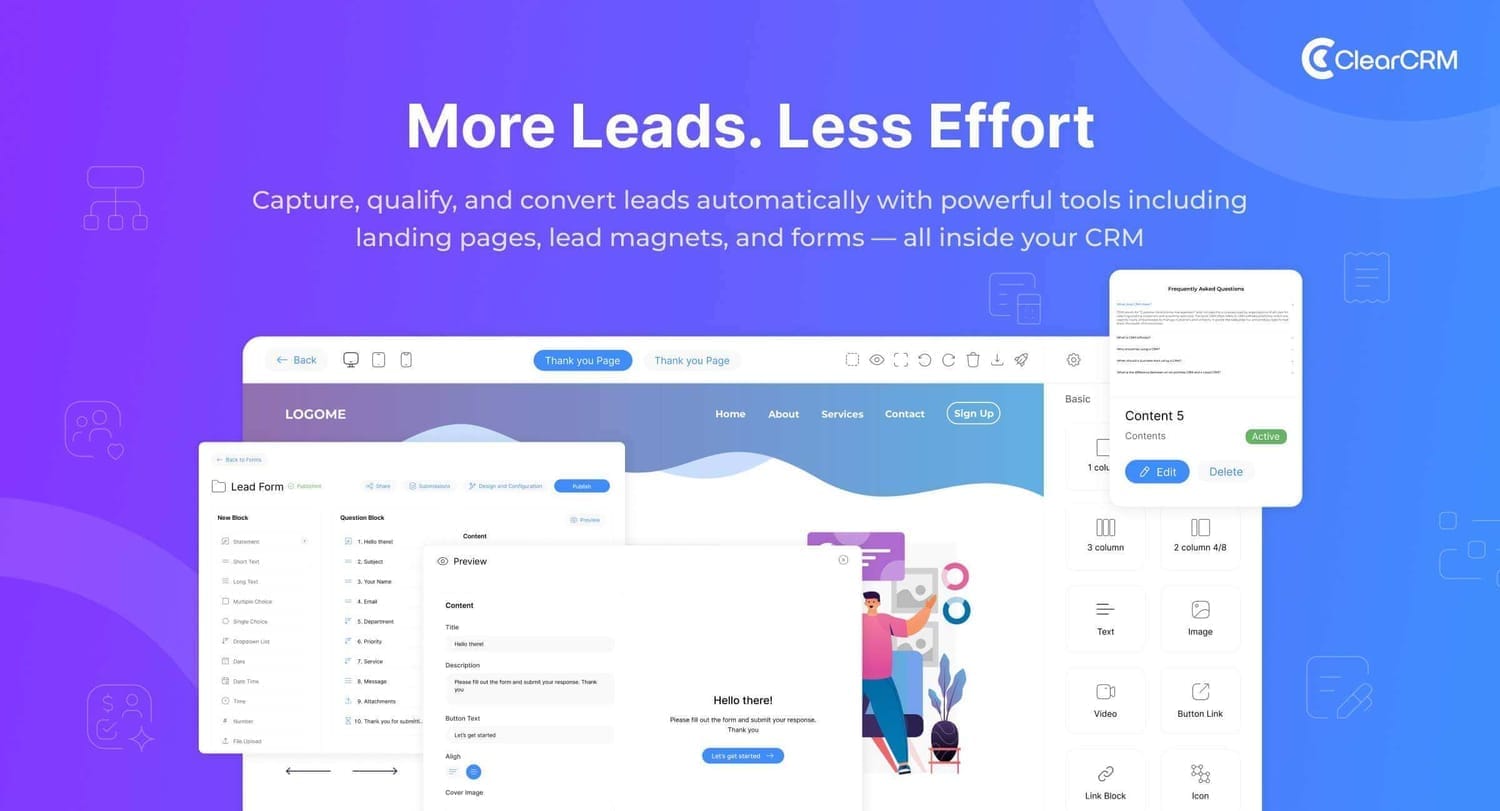
Image Source: ClearCRM
Your lead capture system answers one question: Where does every new inquiry go, so nothing falls through the cracks?
Right now, someone just DMed you: "Hey, what are your rates?"
Where does that go?
If your answer is “I'll remember to reply later”, you've already lost potential income.
A lead is anyone who shows even a hint of interest:
Asked a question about your service
Requested your pricing
Filled out a contact form
Replied "I'm interested" to your post
Sent you a DM saying "tell me more"
Without a lead capture system, all that interest lives scattered across:
Instagram DMs
Email inbox
LinkedIn messages
Facebook Messenger
Your brain (the worst place to store it)
Here's a simple example:
Laura, a copywriter, used to track leads in her head. She'd remember the "hot" ones and forget about the “maybes”. Then she began to use a lead capture system.
Every new inquiry, regardless of the source, was added as a contact. This included their name, email, the service they inquired about, and a follow-up task that was created automatically.
The result? She stopped losing potential clients to her own forgetfulness. And when someone contacted her even six months after they first asked a question, she was able to view their complete history in a matter of seconds.
This included what they had originally inquired about, the date of their last response, and the information that she had already sent to them.
2. Lead Tracking System (So You Actually Know What's Happening)
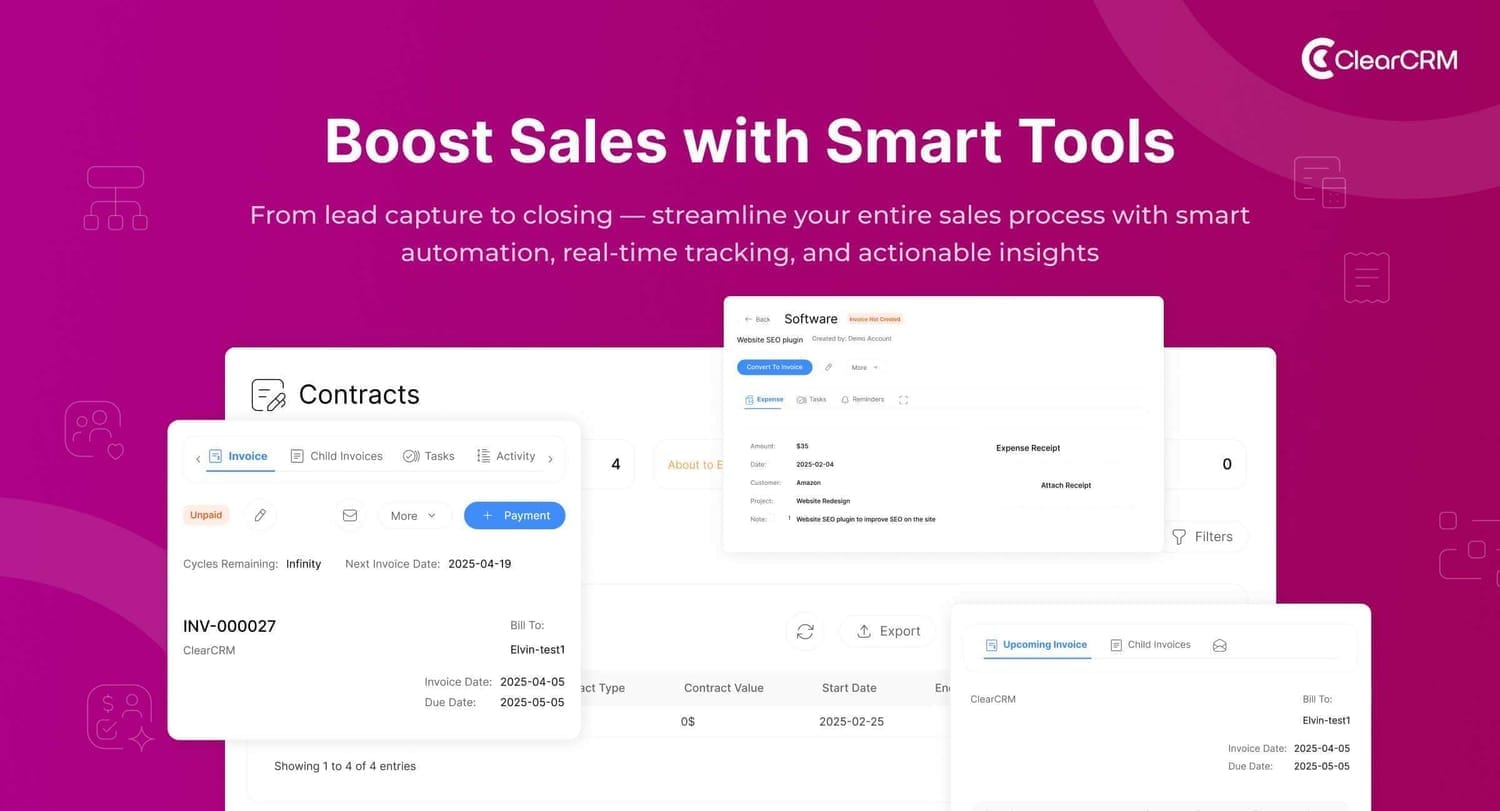
Image Source: ClearCRM
Capturing leads is step one. Tracking them is step two.
Most solopreneurs think they're tracking leads because they "kind of remember" who they talked to recently. That works until you have 10 active conversations and can't recall who needs pricing, who's thinking about it, and who went silent.
A lead tracking system shows you:
New inquiries this week
Active conversations happening now
People who need follow-ups
Leads that went cold (but could be revived)
Let me give you an example:
Daniel, a web designer, realised he had 23 open conversations across email, DMs, and text messages. He had no idea which ones were close to signing, which ones needed proposals, or which ones were dead.
He set up a simple pipeline with four stages:
New Leads
Sent Proposal
Follow-Up Needed
Closed/Lost
All leads got added to the pipeline. Every Monday, he'd review his deals and understand precisely what required his attention.
He would know who was waiting for a proposal, who had not responded in two weeks, and which projects were prepared to close.
His income jumped 40% in two months, not because he got more leads, but because he stopped losing the ones he already had.
When your leads are visible, decisions get easier. When they're invisible, anxiety takes over.
3. Follow-Up System (The Most Profitable System You'll Ever Build)
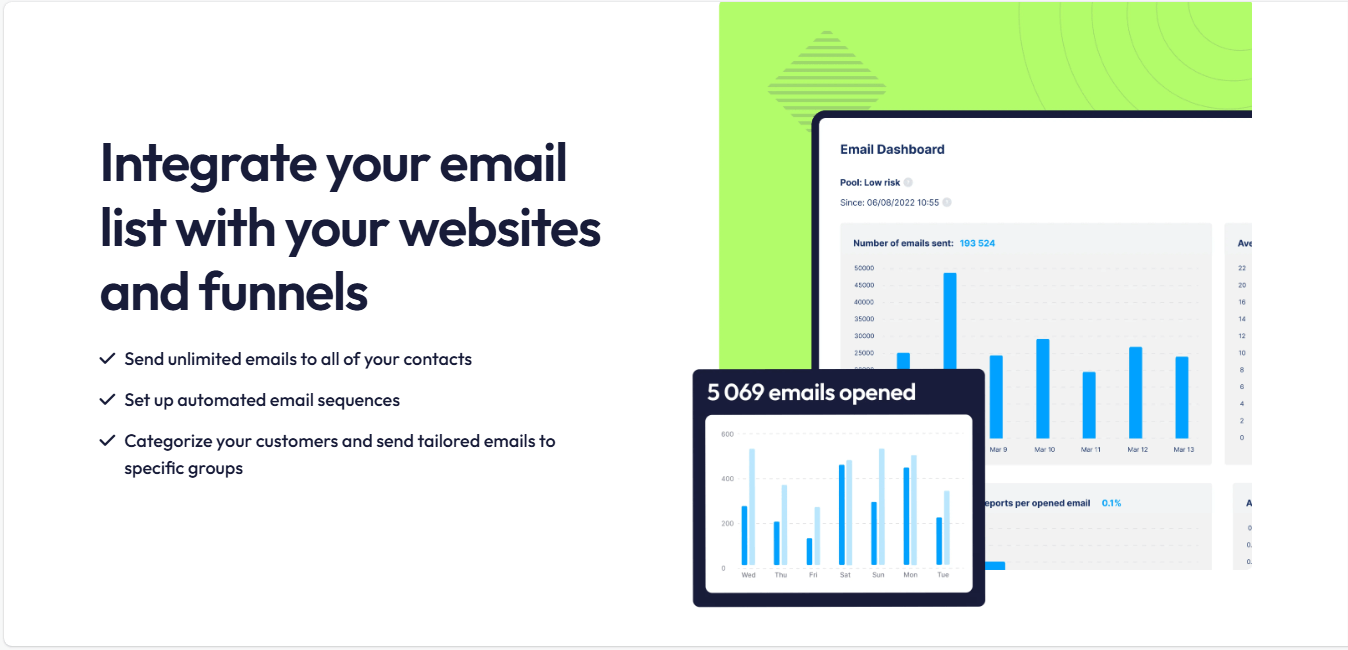
Image Source: Systeme.io
Here's a fact that will change your business:
Most clients don't say yes immediately.
They need to:
Think about it
Check their budget
Talk to their partner
Compare other options
Or they just get distracted and forget to reply
If you don't have a follow-up system, those opportunities die in your inbox.
A follow-up system answers three questions:
Who needs a follow-up?
When should I reach out?
What should I say that's helpful, not pushy?
This system often doubles income without getting a single new lead. You're just capturing value that already exists.
For example:
Jessica, a brand strategist, analysed her closed clients over six months. She discovered that 67% of people who hired her didn't respond to her first message. They hired her after the second or third follow-up.
She was leaving money on the table by giving up too early.
Now she follows up three times over two weeks:
Day 3: "Hey, just checking in. Did you have any questions?"
Day 7: "I wanted to share a quick example of how this worked for a similar client..."
Day 14: "No pressure at all, but I'm opening up slots next week if you're still interested."
Her conversion rate increased from 18% to 34% despite maintaining the same number of leads.
Follow-up isn't annoying. Silence is.
4. Client Management System (So Delivery Doesn't Feel Chaotic)
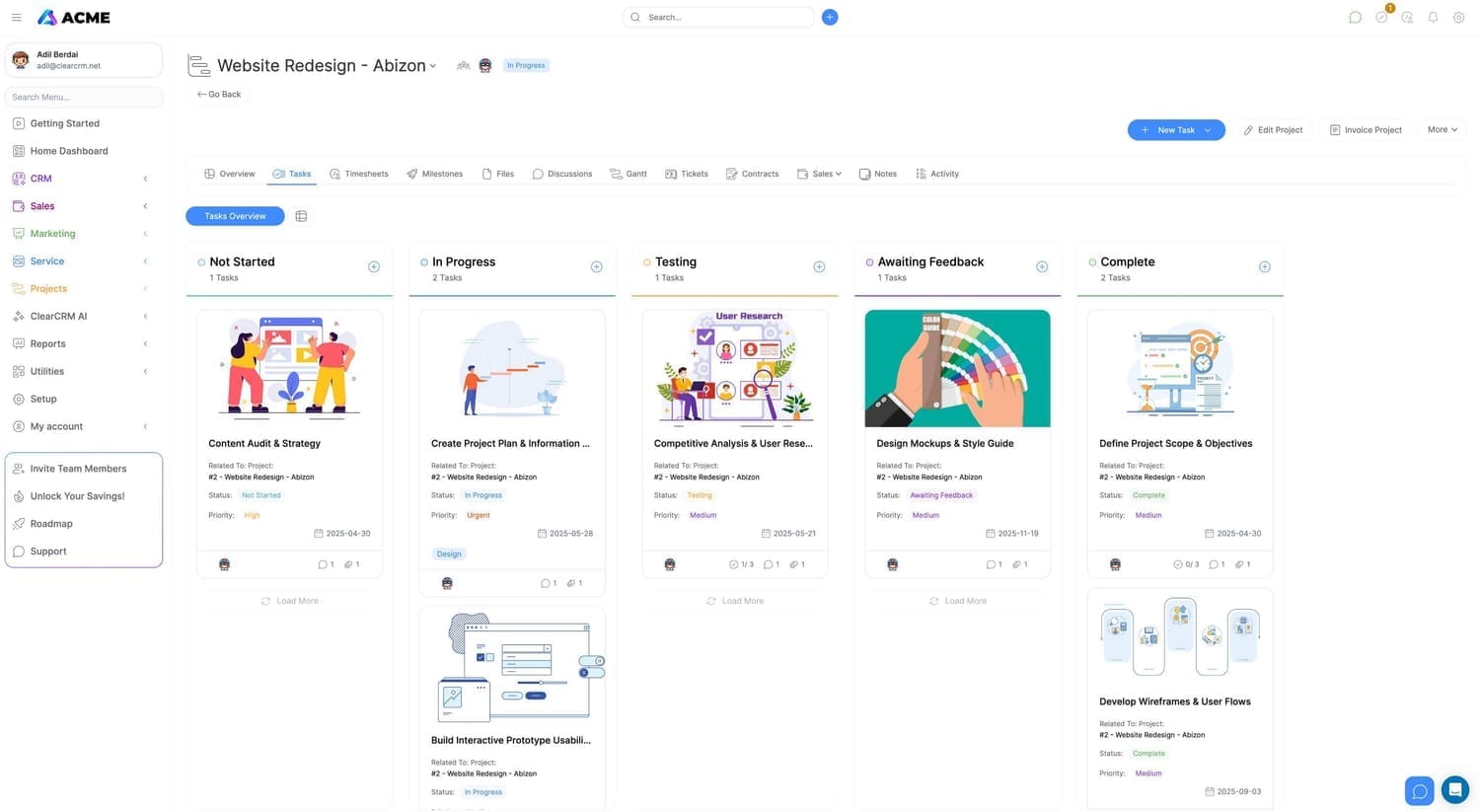
Image Source: ClearCRM
Congrats, someone just signed your contract!
Now what?
If you're like most solopreneurs, you're suddenly juggling:
Project deadlines
Client communication
Deliverables and revisions
Invoicing and payments
Expectations and boundaries
When this lives in your email inbox or your brain, stress compounds fast.
A simple client management system shows you:
Who your current clients are
What stage each project is in
What's due this week
Who needs a check-in today
What matters is that you can open one place and see: "Okay, here's what needs to happen today."
When client work is organised:
You deliver on time (or early)
Clients feel taken care of
You stop waking up at 2 AM, wondering if you forgot something
5. Visibility System (So You Stop Flying Blind)
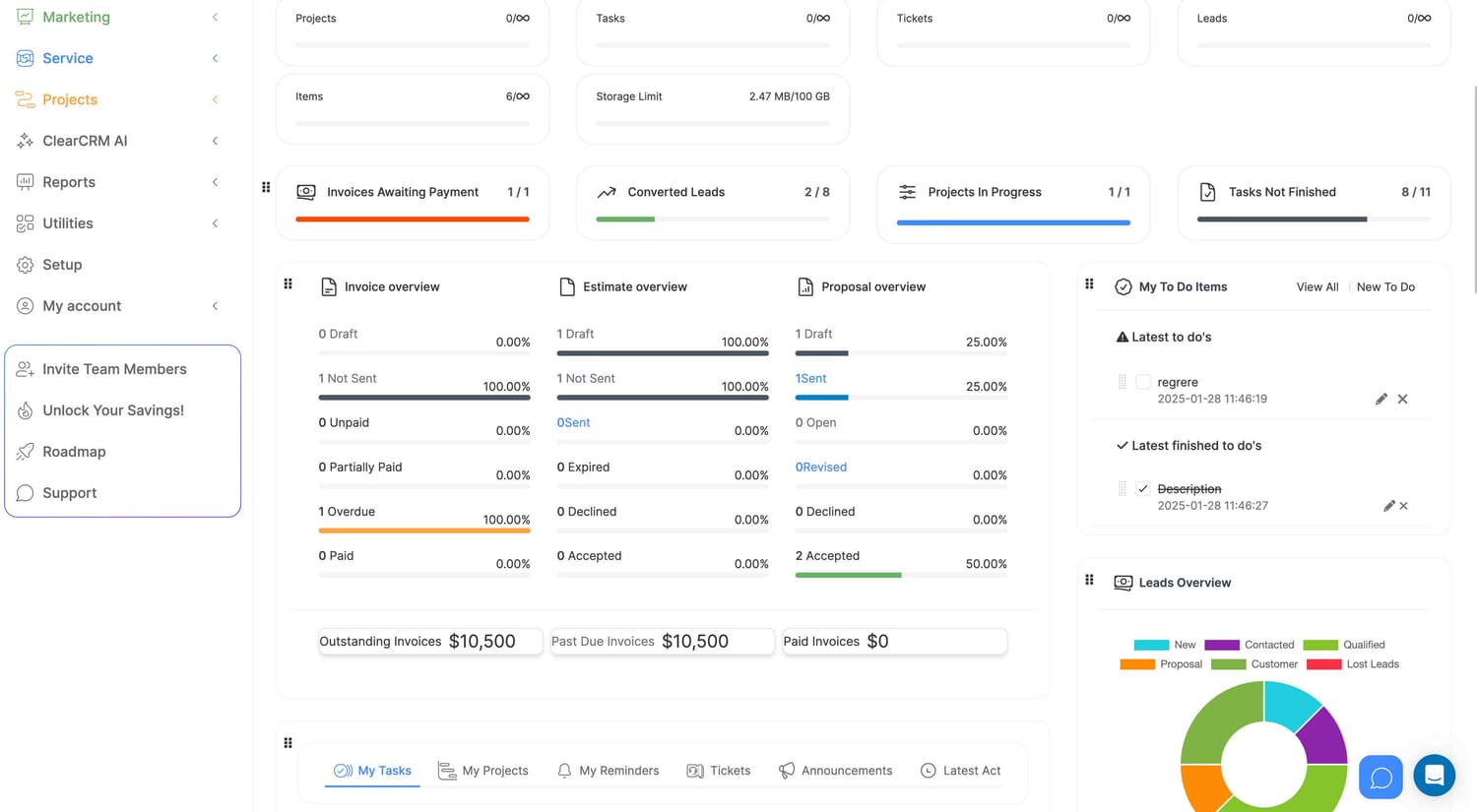
Image Source: ClearCRM
This is the system most solopreneurs skip, and it costs them.
Without visibility into your business metrics, you're guessing about everything:
Is my marketing working?
Why did income drop this month?
Which service should I focus on?
Am I getting better at closing leads?
A visibility system helps you track:
How many leads you get each week
What percentage become paying clients
Where people drop off in your process
Which marketing channels actually work
Average project value
Monthly revenue trends
Every month, spend some time logging:
Leads
Consultations
Clients
Revenue
Over time, patterns emerge. For example, you'll notice that Instagram DMs convert better than email inquiries. Or that people who book a call close at 40%, while cold proposals close at 8%.
This data changes everything. You stop wasting energy on tactics that don't work and double down on what does.
Why These Systems Create Consistent Income
Consistency is related to repeatability.
When you have business systems in place:
Leads don't disappear into the void
Follow-ups happen automatically
Client delivery runs smoothly
You make decisions based on data, not out of panic
This removes the emotional rollercoaster and replaces it with stability.
That's what turns a side hustle into a real business that pays your bills every month.
Signs You Need Business Systems Right Now

You need business systems if:
You sometimes forget to follow up with interested leads
You feel busy all day, but can't point to what you accomplished
Your income fluctuates wildly month to month
Your inbox feels like a chaotic mess
You constantly worry you're dropping the ball
These aren't failures. They're signals that your business is outgrowing your current approach.
Your Business Should Support You
You didn't leave your 9-5 to recreate the stress in self-employment.
You don't need to work harder, longer, or smarter. You need simple business systems that turn your effort into predictable results.
Lead capture, lead tracking, follow-up, client management, and visibility are the foundation of every sustainable solopreneur business.
When these systems are clear and working together, your business feels lighter, and your income becomes more consistent.
That’s where tools like Systeme.io and ClearCRM come in.
If you operate an online business that involves digital products, courses, memberships, or affiliate marketing, Systeme.io provides the ability to capture leads, automate email processes, create sales funnels, and deliver digital products all within a single platform.
If your business focuses on providing services, where maintaining relationships, having conversations, and conducting follow-ups is of utmost importance, ClearCRM offers additional clarity and control.
Set them up once. Use them consistently. And observe how your business transforms from being exhausting to becoming empowering.
Ready to stop losing leads and start building a consistent income? Choose one system from this guide and implement it this week


Trending
It's possible, even without an SSN.
Discover key qualities to consider when choosing right.
Learn what contributes to a successful business launch.
Deals & Promotions
You can also gain unlimited free access to Exclusive Content and Offers.
2026 © MitchelleO.D. All Rights Reserved.
Disclaimer: As an Amazon Associate, we earn from qualifying purchases. We may participate in additional affiliate networks or programs beyond Amazon.
Visit our Affiliate Disclosure Page to learn more.